Are you in a debt trap? 7 warning signs, and how to get out
Borrowing to pay EMIs, a card that never goes down, salary gone by the 10th? 7 signs of a debt trap, a ₹ example of how it grows, and the way out.

This week, Business Today reported on how rising EMIs for phones, TVs and lifestyle purchases are squeezing middle-class family budgets. Citing RBI data and other estimates, it said household debt has been growing much faster than incomes.
Behind those big numbers are ordinary families caught in the same pattern: borrowing to pay for borrowing. That's a debt trap. Here are 7 warning signs, how a trap grows in rupees, and the way out.
What a debt trap is
A debt trap is when you need new debt to keep up with old debt. You pay every month, but what you owe keeps growing. It rarely starts with one big mistake. It usually starts with one small loan, a card balance, or an EMI that felt easy at the checkout.
7 warning signs
- You borrow to pay EMIs. A new loan, a card or an app loan to cover this month's EMI is the clearest sign.
- Your EMIs are more than half your take-home pay. Above 50% leaves almost no room for anything to go wrong. See how much EMI you can afford.
- You pay only the minimum due on your cards. And the balance never really falls. That's the minimum due trap.
- Your salary is gone within days. EMIs, rent and bills take it all by the 10th, and the rest of the month runs on credit.
- You've missed or delayed an EMI. Bounce charges, penal charges and credit report marks follow. See what happens if you miss an EMI.
- You use pay-later or loan apps for everyday costs. Groceries, recharges or fuel on credit.
- You hide loans from your family. Secrecy is often a sign the load has become too heavy to talk about.
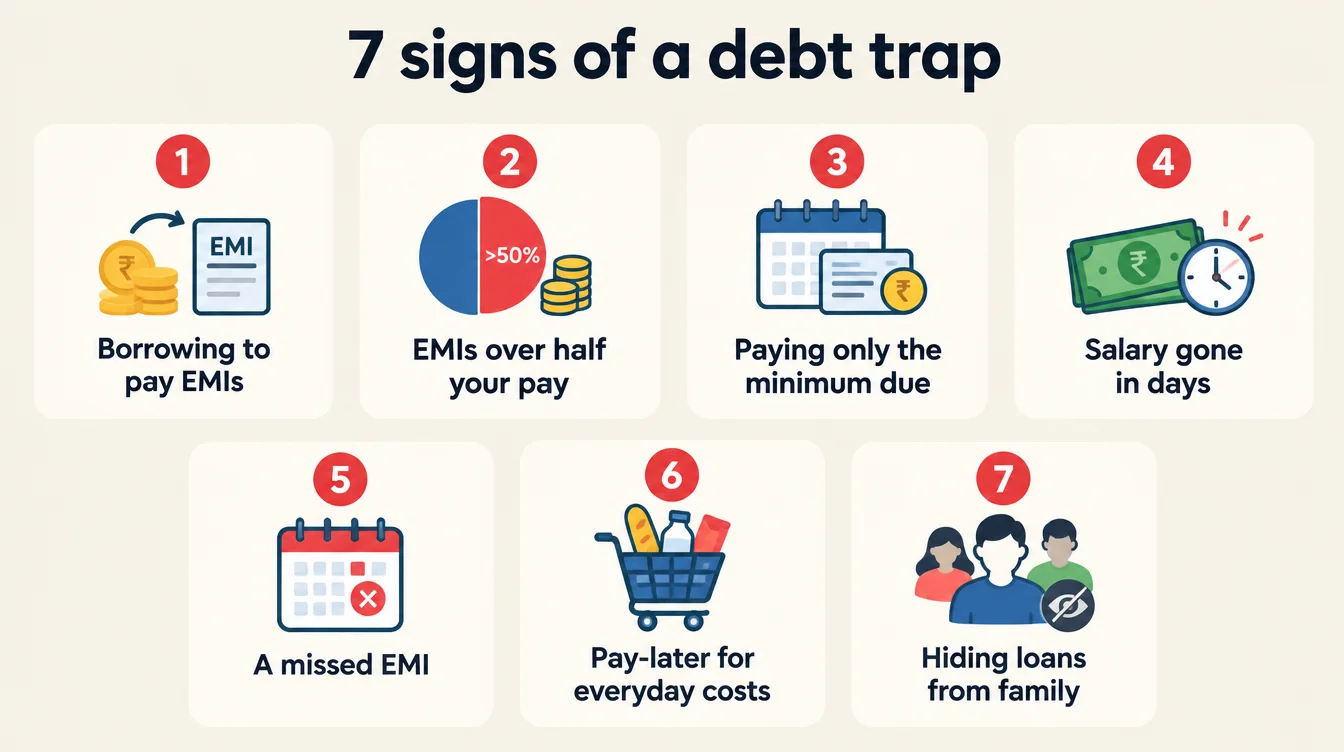
One or two signs? Act now, before it grows. Three or more? It's time for a full plan.
How a debt trap grows, in rupees
Take a family that brings home ₹50,000 a month and pays ₹28,000 in EMIs. That's 56% of take-home pay. After rent, food and bills, they're ₹3,000 short every month, so they put that on a credit card.
After one year of doing this:
- They've added ₹36,000 of spending to the card.
- But they now owe about ₹45,400, because about ₹9,400 of interest and GST has piled on.
- And the card bill itself becomes one more payment they can't afford.
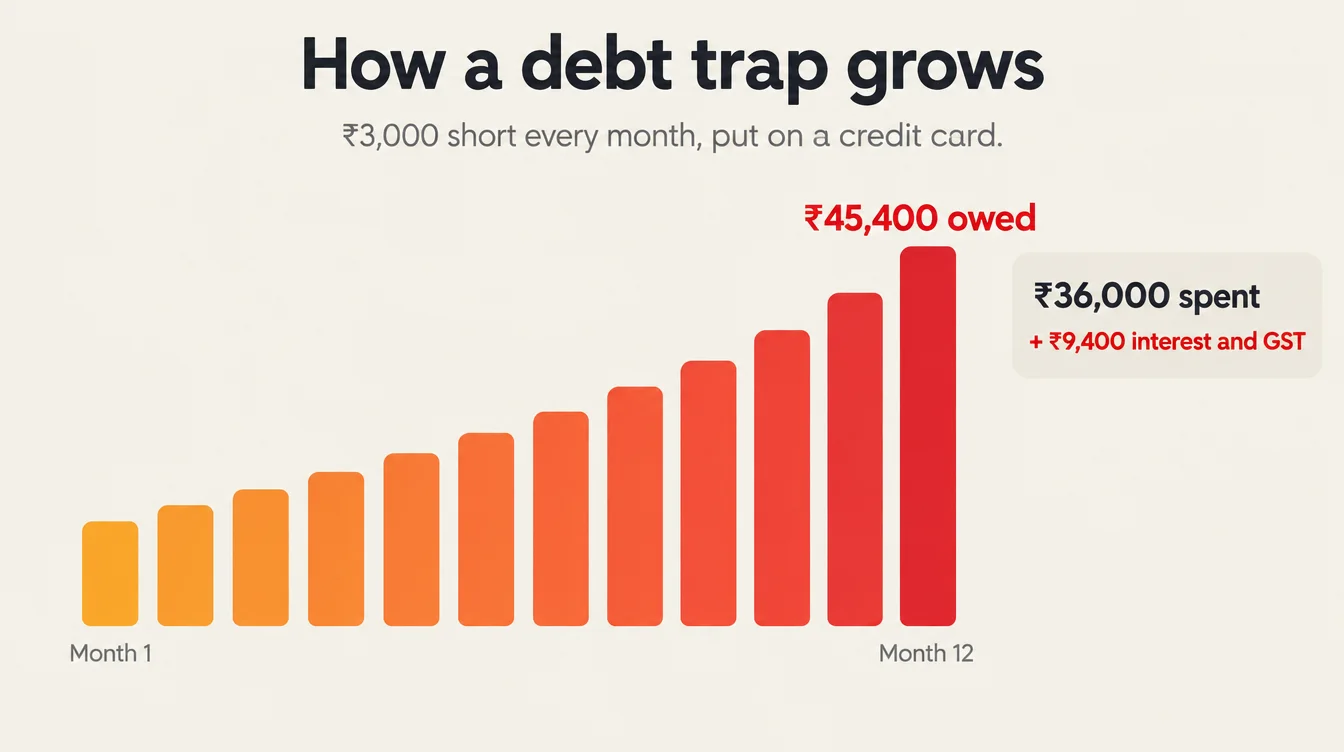
Estimate: card interest at 3.5% a month plus 18% GST, worked out monthly, with no payments made towards the card.
That's how a small monthly gap becomes a growing pile, and why the trap is so hard to see from the inside.
How to get out
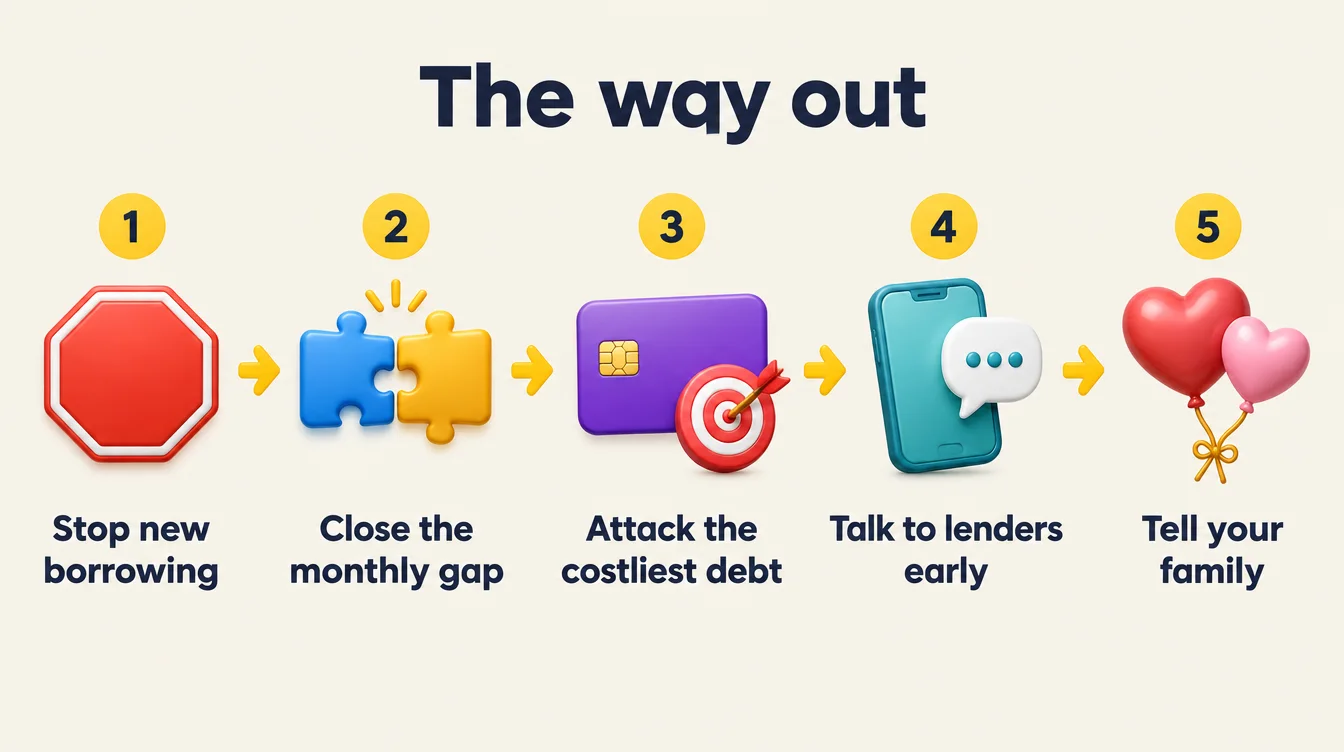
1. Stop the new borrowing
This is the hardest and most important step. No new loans, no pay-later, no new EMIs, and never an app loan to pay another loan. That's how loan app harassment begins.
2. Find the monthly gap, and close it
Write down income, EMIs and living costs. If you're short every month, close the gap first: cut what you can, pause subscriptions, and look at what can wait. Even reducing the gap helps.
3. List every loan, and attack the most expensive
Put every debt on one list, then put any extra money on the highest-rate debt, usually cards, while paying every other EMI. When one closes, roll its EMI into the next. Our step-by-step plan to get out of debt shows how one family went from 50 months to 21.
4. Talk to your lenders, early
If the EMIs are simply too much, ask your lenders before you miss payments about a longer tenure, a lower EMI for a few months, or converting card dues to a lower-rate EMI. Ask how each option affects your credit report.
5. Tell your family
Debt is easier to fix with two people working on it. Our guide on how to talk to your spouse about debt can help start that conversation.
Be careful of quick fixes
- "Settle all your loans" agents can end the calls, but settled loans can hurt your credit score for years. Ask your lenders directly first.
- Consolidation loans only help if they're clearly cheaper and you stop using the old cards.
- Unknown loan apps offering instant cash are often illegal and dangerous.
You're not alone
Debt traps are common, and they're not a sign of failure. They usually come from a series of small, understandable decisions. If money worries are affecting your sleep or health, you can call Tele-MANAS on 14416, the government's free mental health helpline.
The short version
- A debt trap means borrowing to keep up with borrowing.
- Watch for the 7 signs, especially borrowing to pay EMIs and EMIs above half your pay.
- A small monthly gap on a credit card can grow by about 26% in a year.
- Stop new borrowing, close the gap, attack the costliest debt, and talk to your lenders early.
The freeeme app shows every loan, your EMI share of income, and the month your family will be debt-free, so you can see a trap forming, and plan your way out.
Questions people ask
What is a debt trap?
A debt trap is when you have to borrow again just to keep up with existing loans, so the total you owe keeps growing even though you're paying every month. It usually starts small, with a card balance or a loan taken to cover an EMI.
How do I know if my EMIs are too high?
Add up all your EMIs and compare them with your take-home pay. Under about 30% is comfortable; 30–50% is stretched; above 50% is high risk, especially if you're borrowing to cover everyday costs.
Can I get out of a debt trap without a big salary increase?
Usually, yes. Stop new borrowing, list every loan, cut the most expensive debt first, and talk to lenders about a longer tenure or lower EMI if needed. It takes time, but small, steady steps work.
This is general information to help you understand your options, not financial, legal or tax advice. Rates, rules and charges change; check your lender's latest terms before you decide.