Debt snowball vs avalanche: which loan to pay off first
Two ways to clear several loans faster, worked through with a real Indian family example in rupees, so you can see what each one costs.

If your family pays more than one EMI, there's a question worth asking: when you have a little extra money, which loan should it go to? There are two well-known answers, the debt avalanche and the debt snowball. Both work. They just reward you in different ways.
The two methods in one line each
- Debt avalanche: put every extra rupee on the loan with the highest interest rate. You pay the least interest overall.
- Debt snowball: put every extra rupee on the loan with the smallest balance. You close your first loan sooner, which feels good and keeps you going.
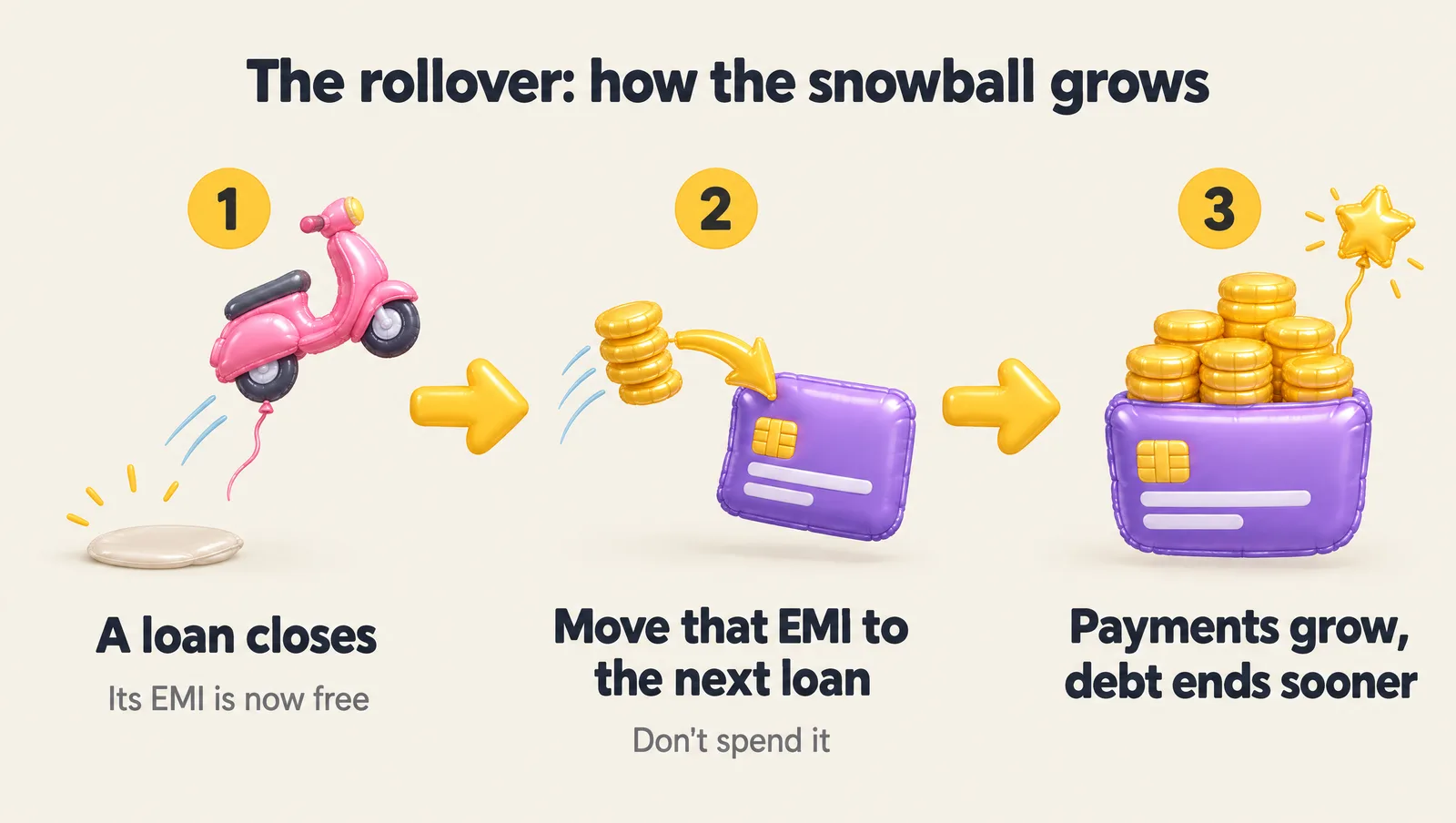
In both, you keep paying the normal EMI or minimum due on every loan. When a loan closes, its full EMI rolls over to the next loan on your list. That rollover is what makes the "snowball" grow.
A worked example
Meet a family in Pune with three loans and ₹12,500 going out in EMIs every month:
| Loan | Still owed | Interest a year | Paid each month |
|---|---|---|---|
| Credit card | ₹60,000 | 42% | ₹3,000 |
| Personal loan | ₹1,50,000 | 14% | ₹7,000 |
| Two-wheeler loan | ₹40,000 | 10% | ₹2,500 |
They decide they can find ₹5,000 extra each month, so ₹17,500 in total goes to debt.
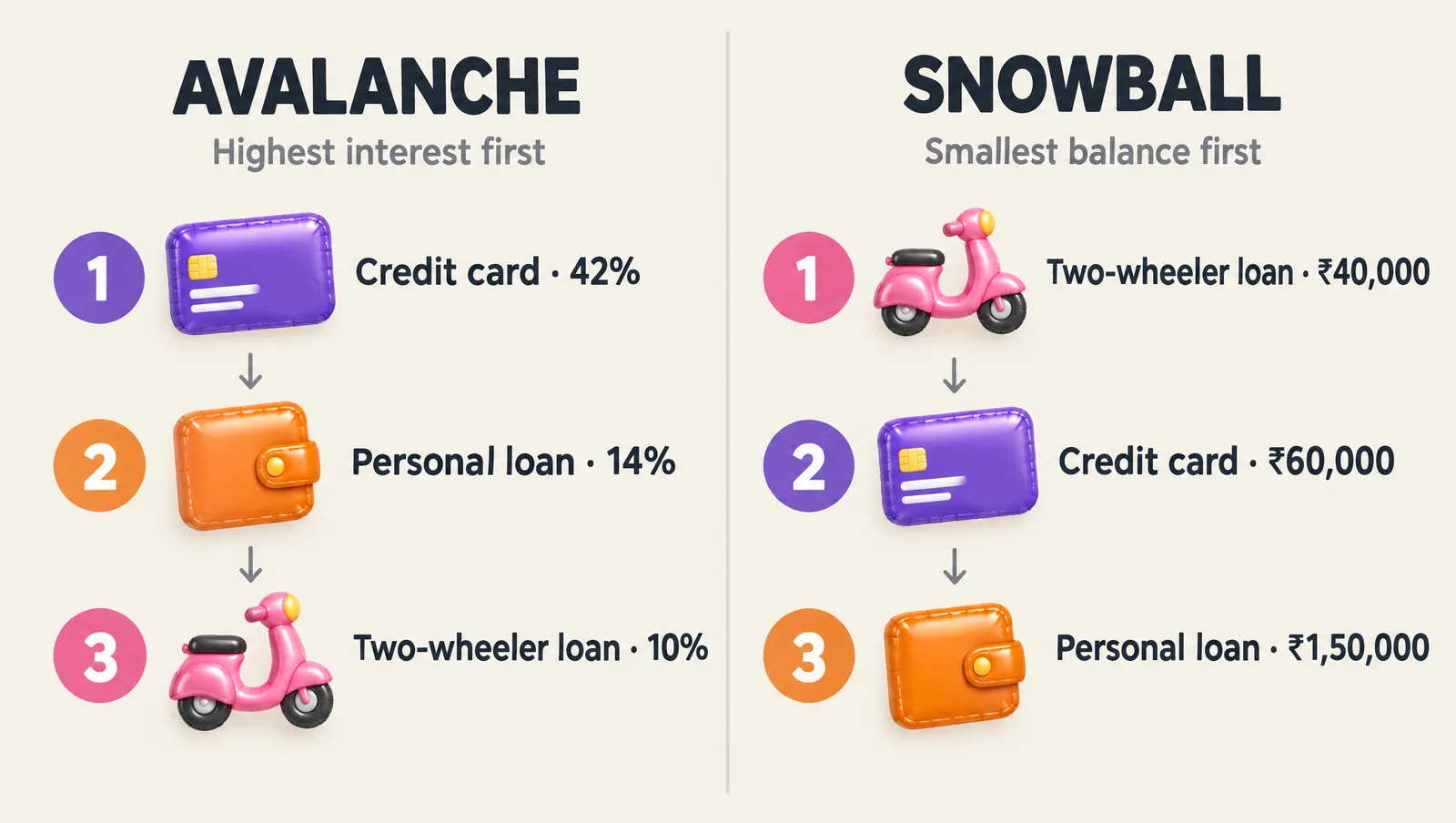
- Avalanche order: credit card (42%) → personal loan (14%) → two-wheeler (10%)
- Snowball order: two-wheeler (₹40,000) → credit card (₹60,000) → personal loan (₹1,50,000)
Here is how it plays out:
| Plan | First loan closed | Debt-free in | Total interest paid |
|---|---|---|---|
| Only the usual payments | Month 18 | 35 months | ₹71,725 |
| Snowball (+₹5,000) | Month 6 | 17 months | ₹38,183 |
| Avalanche (+₹5,000) | Month 9 | 17 months | ₹32,059 |
Three things stand out:
- The extra ₹5,000 matters far more than the method. Either way, the family is debt-free in 17 months instead of 35, and saves over ₹33,000 in interest.
- Avalanche saves about ₹6,100 more here, because it attacks the 42% credit card first.
- Snowball closes a loan three months sooner. The two-wheeler loan is gone in month 6, and that "win" is real motivation.
These figures are estimates: interest is worked out monthly on the balance, and your lender may calculate it slightly differently.
Which one should your family choose?
Think about what will keep you going in month 8, when the excitement has worn off:
- If your loans have very different interest rates, especially a credit card or a pay-later balance at 30–45% a year, the avalanche usually saves a meaningful amount.
- If you have several small loans and feel overwhelmed, the snowball's quick wins can be worth the extra cost.
- If the rates are close to each other, the difference is small. Pick the order you'll stick to.
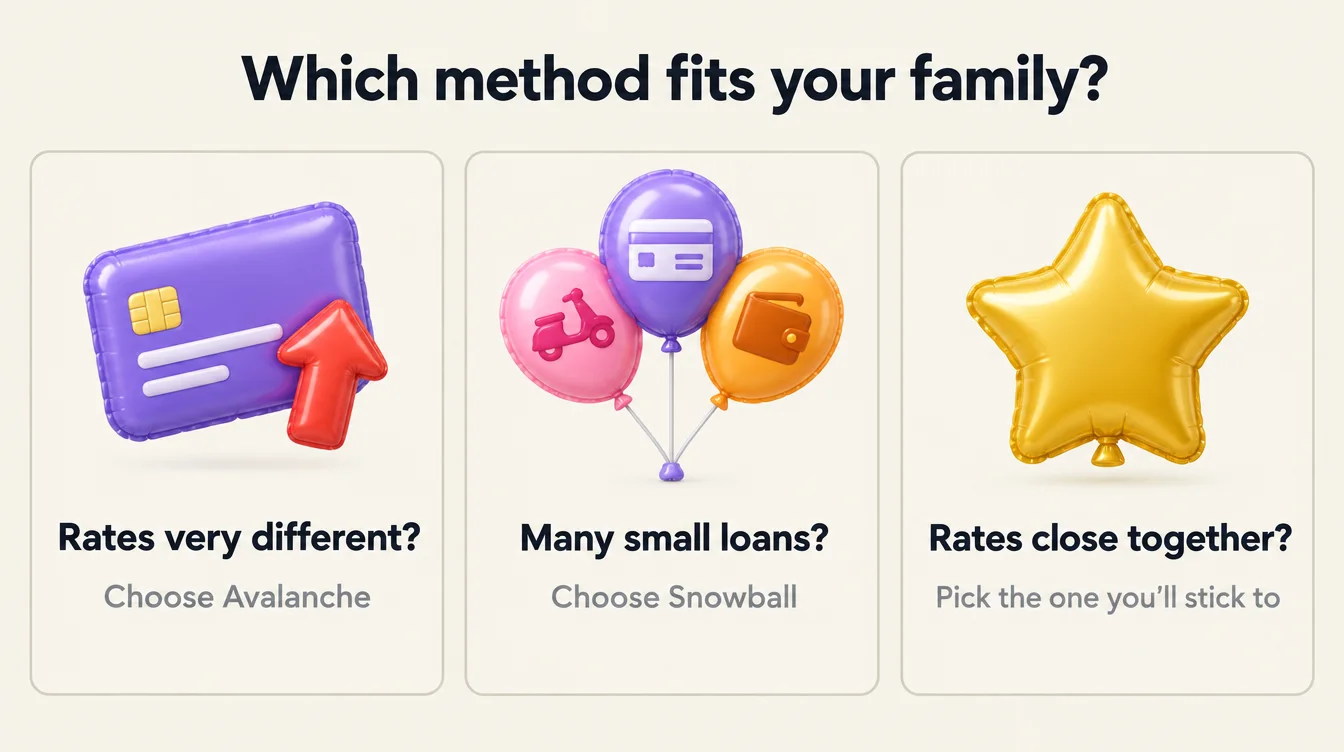
Some families mix the two: clear one tiny loan first for an early win, then switch to the highest rate.
Mistakes that undo both methods
- Spending the freed-up EMI. When a loan closes, the money it freed must go to the next loan, or the plan stalls.
- Taking a new loan midway. A new phone on EMI quietly resets the clock.
- Skipping an EMI to prepay another loan. Late fees and credit score damage cost more than you save.
- Ignoring prepayment charges. Some personal loans charge a fee for paying early. Check your loan agreement before you prepay a large amount.
Find your own debt-free date
The best plan starts with a clear list: every loan, what's left, the interest rate and the EMI. Write it down, choose your order, and decide how much extra you can add each month, even if it's ₹1,000.
The freeeme app does this for you: add your loans once and it shows the month your family will be debt-free, and how that date moves when you pay a little more.
Questions people ask
Is the avalanche method always better?
It always costs the least interest, as long as you stick with it. The snowball method costs a little more but closes a loan sooner, which helps many families keep going. The best method is the one you will follow every month.
Should I stop paying the other EMIs while I clear one loan?
No. Keep paying every EMI and minimum due on time. Both methods only decide where your extra money goes. A missed EMI brings late fees and can hurt your credit score.
What if I have no extra money each month?
Start with the money freed when any loan closes: move that full EMI to the next loan instead of spending it. Even without extra money, this rollover shortens the time to debt-free.
This is general information to help you understand your options, not financial, legal or tax advice. Rates, rules and charges change; check your lender's latest terms before you decide.