Got a Diwali bonus? Prepay your loan or keep the cash?
What ₹50,000 of Diwali bonus does against a credit card, a personal loan or a home loan, which to clear first, and why 'reduce tenure' usually saves more.

Diwali bonus season is here. After the sweets and gifts, many families have the same question: should the rest of the bonus go towards a loan, or stay in the bank?
Prepaying a loan is one of the few "investments" with a guaranteed return: every rupee you prepay saves the interest that rupee would have cost. But the order matters. Here's where ₹50,000 does the most good, worked out in rupees.
Step 1: Keep a safety buffer first
Before you prepay anything, make sure you have money set aside for emergencies. A job loss, hospital bill or late salary is when families end up missing EMIs or borrowing from expensive apps.
- If you have no buffer at all, keep at least one month of EMIs and household costs from the bonus.
- If you already have a buffer, the rest of the bonus can go to debt.
Money you've prepaid into a loan is hard to get back in an emergency. Cash in a savings account isn't.
Step 2: Clear the most expensive debt first
The best place for a prepayment is the debt with the highest interest rate. Here's what ₹50,000 does against three common loans:
| Loan | Interest rate | What ₹50,000 does |
|---|---|---|
| Credit card balance of ₹50,000 | about 42% a year + GST | Clears it fully. Saves about ₹15,800 in interest and GST and frees ₹5,000 a month for 14 months |
| Personal loan of ₹2 lakh, 3 years left | 14% | Saves about ₹21,800 interest, ends 10 months sooner |
| Home loan of ₹30 lakh, 20 years left | 8.5% | Saves about ₹2.13 lakh interest, ends 10 months sooner |
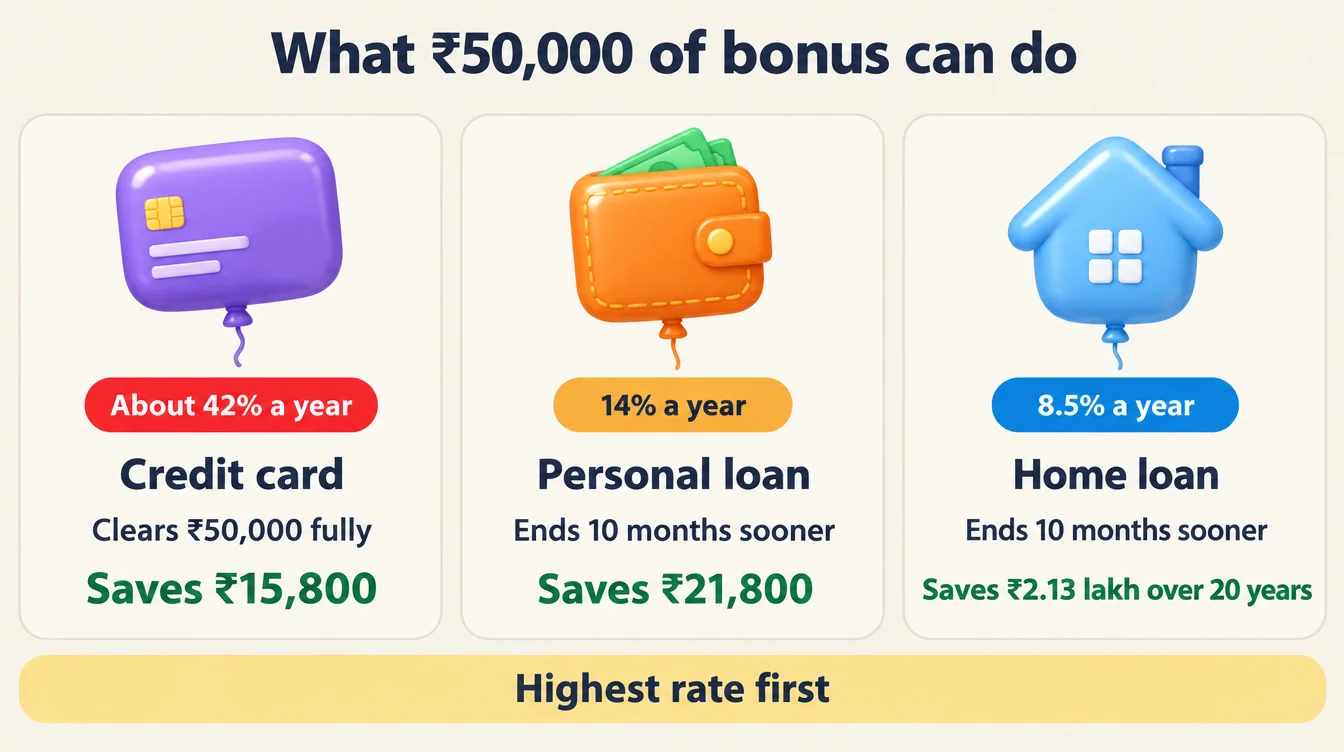
Estimates: we assumed the EMI stays the same after prepaying, with interest worked out monthly. For the card, we assumed ₹5,000 a month is being paid and no new spending.
Wait, the home loan saves the most rupees. Shouldn't that come first? Not quite. The home loan saving is bigger only because it builds up over 20 years. Per year, every rupee on the credit card is saving you about 42% plus GST, versus 8.5% on the home loan. Clear the costly debt first, then move the freed-up EMI and next year's bonus to the home loan. That's the debt avalanche method.
Step 3: Choose "reduce tenure", not "reduce EMI"
When you prepay a loan, the lender usually asks whether you want a lower EMI or a shorter loan. On the ₹30 lakh home loan with ₹50,000 prepaid:
| Choice | EMI | Interest saved |
|---|---|---|
| Reduce tenure (same EMI) | ₹26,035 | about ₹2.13 lakh, 10 months sooner |
| Reduce EMI (same end date) | ₹25,601 (₹434 less) | about ₹54,100 |
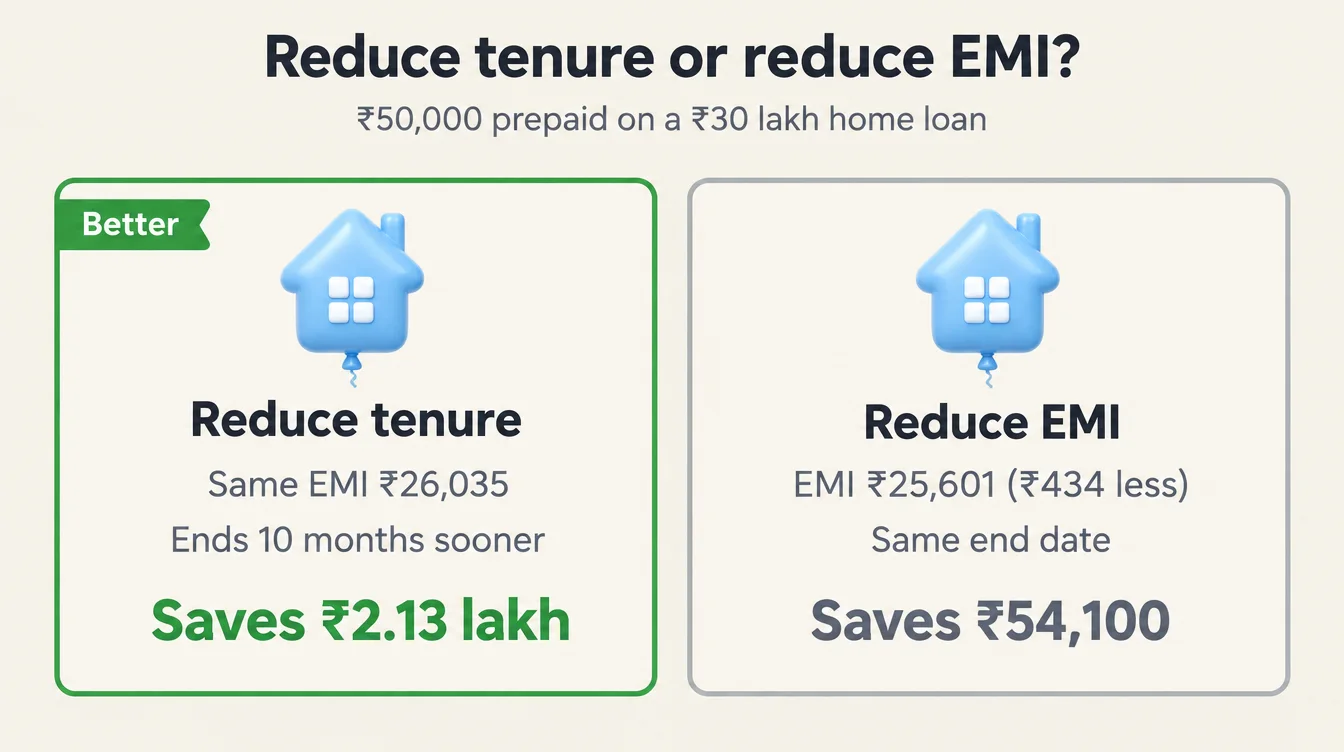
Reducing the tenure saves about four times more. Choose "reduce EMI" only if your monthly budget is genuinely tight.
Step 4: Check for prepayment charges
Under the RBI's new rules, effective from 1 January 2026, banks and NBFCs can't charge prepayment fees on floating-rate loans to individuals taken for non-business purposes. That covers most home loans.
Fixed-rate loans, like many personal and car loans, can still have prepayment or foreclosure charges. Check your loan agreement, or ask your lender, before you pay. Ask for a revised schedule or statement afterwards showing the new end date.
When keeping the cash makes sense
- You have no emergency buffer. Build that first.
- Your only loan is a low-rate home loan and you have other near-term needs, like school fees due in a few months. Put that money aside first.
- Big expenses are coming soon, such as a wedding or a planned medical procedure, which you'd otherwise borrow for at a higher rate.
A simple Diwali bonus plan
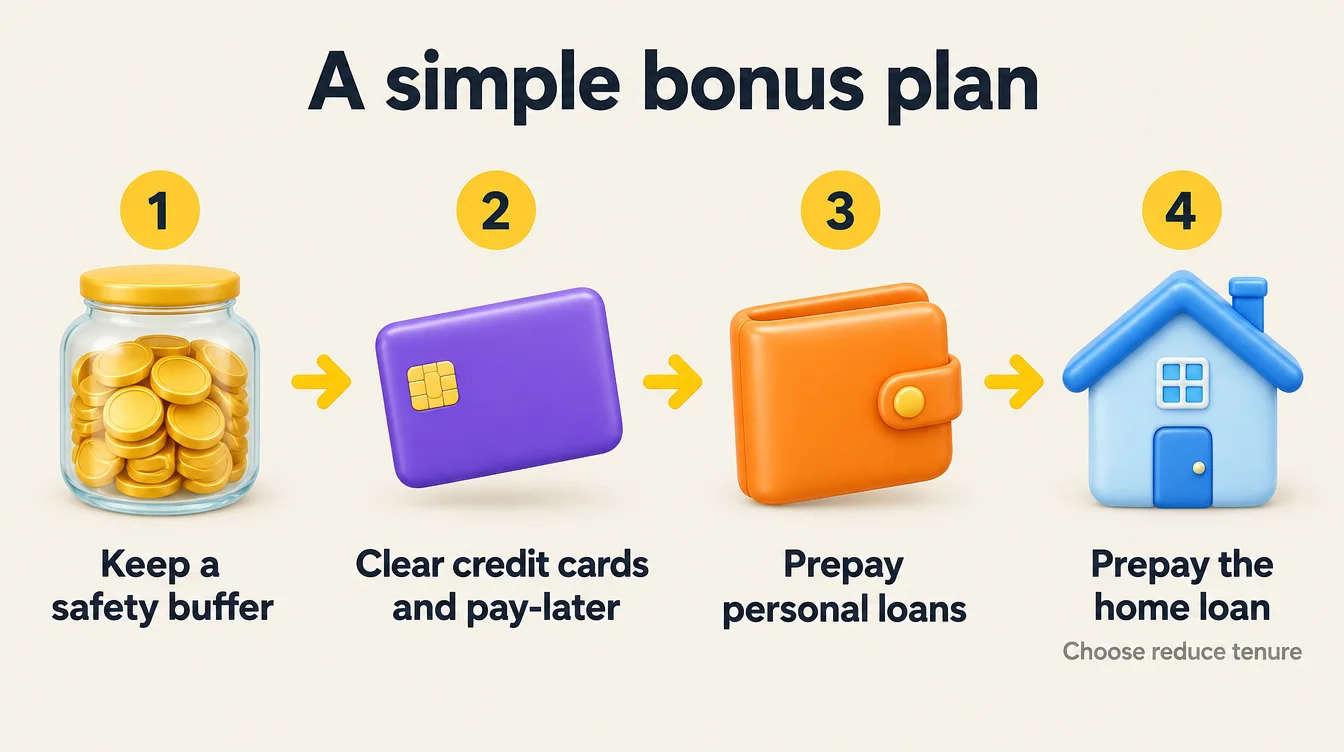
- Keep a safety buffer of at least one month of EMIs and household costs.
- Clear credit cards and pay-later balances in full.
- Prepay personal loans next, checking for charges.
- Then prepay the home loan, and choose "reduce tenure".
A Diwali bonus spent wisely can bring your family's debt-free date months, or even years, closer.
The freeeme app shows exactly how much sooner your family becomes debt-free when you prepay, so you can see what this year's bonus is really worth.
Questions people ask
Is it better to prepay a home loan or keep the money?
Keep an emergency buffer first. After that, prepaying the costliest debt usually gives the best guaranteed return. A home loan is often the cheapest debt you have, so clear credit cards and personal loans before it.
Should I reduce my EMI or my tenure after prepaying?
Reducing the tenure usually saves much more interest, because the loan ends sooner. Reducing the EMI lowers the monthly bill instead. If your budget is comfortable, choose tenure; if it's tight, a lower EMI can help.
Are there charges for prepaying a loan?
Under RBI rules effective from 1 January 2026, banks and NBFCs can't charge prepayment fees on floating-rate loans to individuals for non-business purposes. Fixed-rate loans may still have charges, so check your loan agreement.
This is general information to help you understand your options, not financial, legal or tax advice. Rates, rules and charges change; check your lender's latest terms before you decide.