How to pay off credit card debt fast: a 6-step plan
₹1.2 lakh of card debt across two cards: minimum due takes 21 years, a fixed ₹12,000 a month clears it in 13 months. Here's the 6-step plan.

Credit card debt is the most expensive debt most Indian families carry, usually 3–3.75% a month, or about 36–45% a year, plus 18% GST on the interest. That's why it grows so fast, and why paying only the minimum can keep you stuck for decades.
The good news: credit card debt is also the debt that drops fastest once you change how you pay. Here's a 6-step plan, with a family's two cards worked out in rupees.
A worked example: two cards, ₹1.2 lakh
Priya has two cards:
| Card | Balance | Interest |
|---|---|---|
| Card A | ₹80,000 | 3.6% a month + GST |
| Card B | ₹40,000 | 3.0% a month + GST |
| Total | ₹1,20,000 |
Her first month's minimum dues add up to about ₹6,240. Here's what different plans do, with no new spending on either card:
| Plan | Debt-free in | Interest + GST |
|---|---|---|
| Pay only the minimum due on both | about 21 years | about ₹3.93 lakh |
| Pay ₹8,000 a month, Card A first | 24 months | about ₹65,500 |
| Pay ₹12,000 a month, Card A first | 13 months | about ₹35,300 |
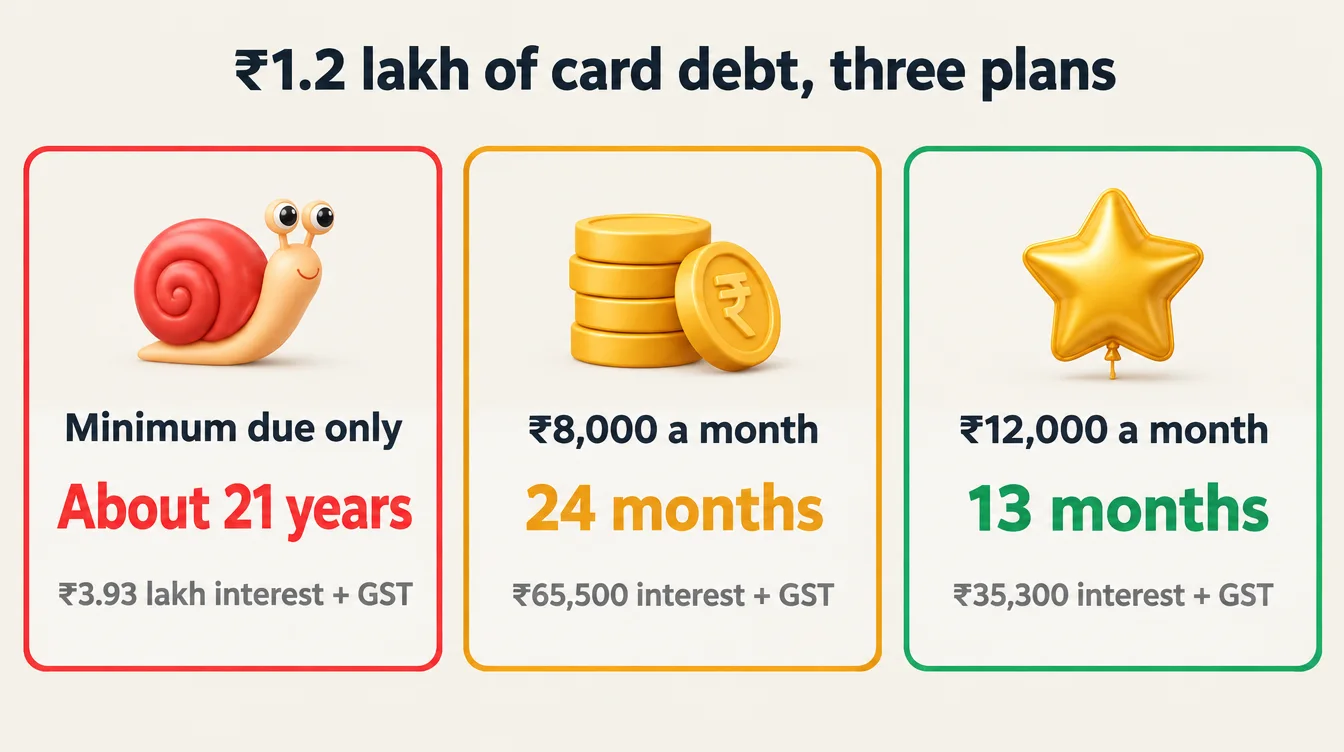
Estimates: interest worked out monthly with 18% GST; minimum due of 5% (at least ₹500) on each card; no new purchases.
A fixed ₹12,000 a month instead of the falling minimum saves Priya about ₹3.58 lakh and about 20 years.
Step 1: Stop using the cards
You can't empty a bucket while the tap is running. Until the debt is cleared:
- Use UPI or a debit card for daily spending.
- Remove saved cards from shopping and food apps.
- Turn off any auto-renewals charged to the card.
New purchases on a card with an unpaid balance usually lose the interest-free period and start charging interest from day one.
Step 2: Pay a fixed amount, not the minimum
The minimum due falls as your balance falls, so paying "just the minimum" stretches the debt out for years. Pick a fixed monthly amount you can afford, ideally well above the first month's minimum, and keep paying it even as the minimum drops.
Step 3: Attack one card at a time
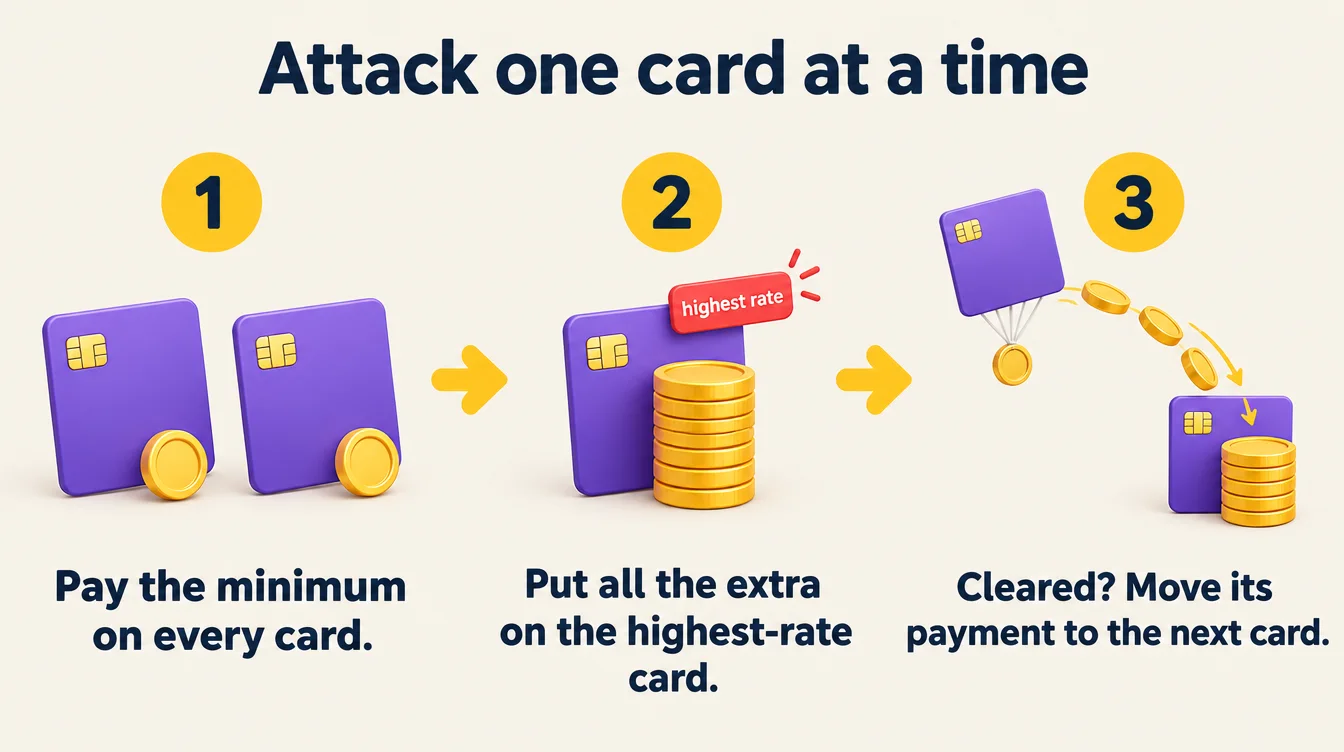
Pay the minimum on every card, then put all the extra on one card:
- Highest rate first (avalanche): saves the most. For Priya, ₹12,000 a month with Card A first costs about ₹35,300.
- Smallest balance first (snowball): clears a card sooner. Card B first costs about ₹38,000, about ₹2,700 more, and takes one month longer.
When one card is cleared, move its whole payment to the next. We compare both methods in debt snowball vs avalanche.
Step 4: Move the debt to a cheaper rate
If you can't clear it within a few months, consider moving it to a lower rate:
- Convert to card EMI. Often far cheaper than revolving at 3–3.75% a month. We worked out the real cost in is converting credit card dues to EMI worth it?
- A personal loan. For Priya's ₹1.2 lakh, a 12-month personal loan at 13% with a 2% fee would cost about ₹11,400, at an EMI of about ₹10,700. That's cheaper than revolving, if she qualifies and stops using the cards.
- Balance transfer. Some banks let you move a balance to a new card at a lower rate for a few months. Check the fee and what rate applies after the offer ends.
Whichever you choose, compare the total cost, including processing fees and GST, not just the rate.
Step 5: Find the extra money
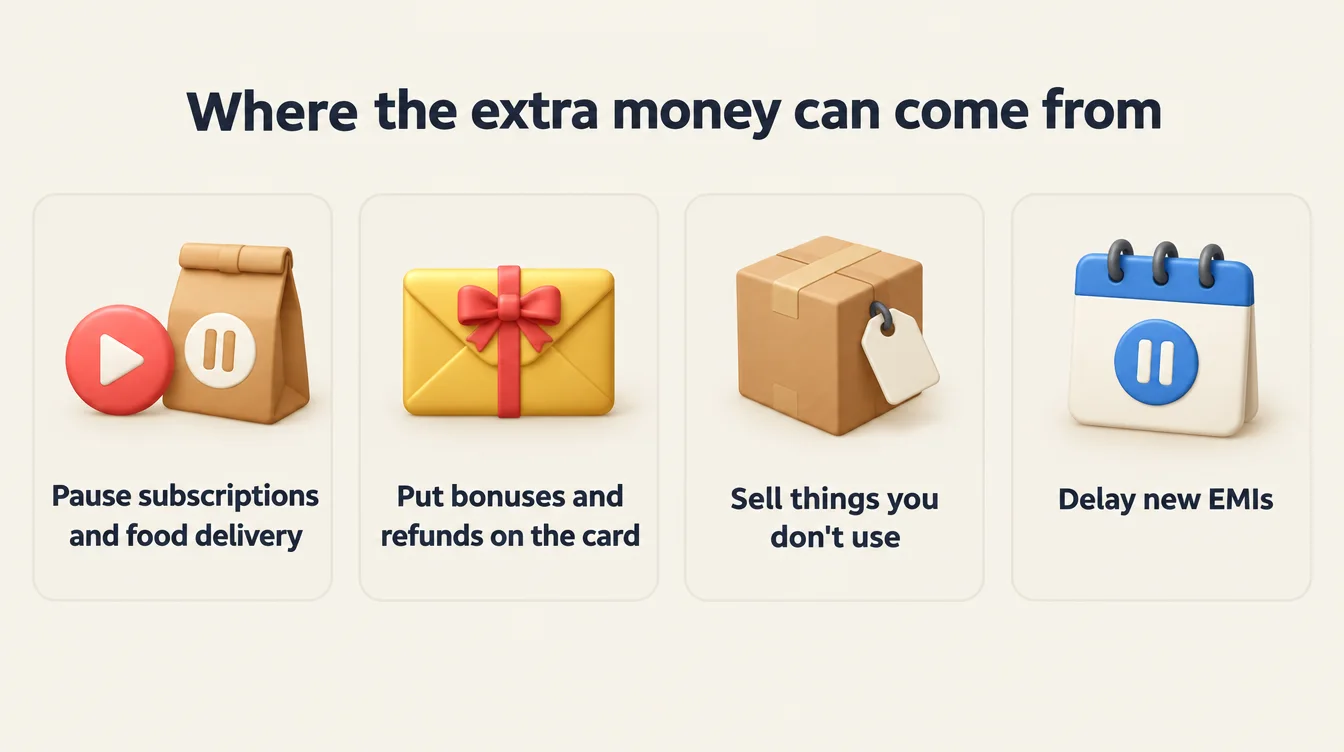
Where can ₹12,000 a month come from? For most families, a mix:
- Cut or pause subscriptions and food delivery for a few months.
- Put any bonus, refund or gift money straight on the card. See what to do with a Diwali bonus.
- Sell things you no longer use.
- Delay big purchases, especially new EMIs, until the cards are clear.
Even ₹2,000 more than the minimum makes a big difference over a year.
Step 6: Protect your progress
- Set up auto-debit for at least the minimum due, so you're never late. A late payment adds a fee and can hurt your credit score.
- Keep a small buffer so one bad month doesn't send you back to the card.
- Check every statement for new charges, fees or interest you didn't expect.
- Once it's cleared, pay the full bill every month. That's how a credit card stays free.
If you can't keep up
If you're already missing payments, call your bank before it gets worse and ask about converting to EMI or a payment plan. Be careful with "settlement" offers: they can end the calls, but a settled card can hurt your score for years. If recovery calls turn abusive, know your rights. And if money stress is getting heavy, you can call Tele-MANAS on 14416.
The short version
- Stop using the cards.
- Pay a fixed amount, not the minimum.
- Attack one card at a time, highest rate first.
- Move the balance to a cheaper rate if you can.
- Find the extra money.
- Protect your progress, then pay in full every month.
The freeeme app shows every card and loan in one place, and the exact month you'll be free of your cards when you pay a fixed amount instead of the minimum.
Questions people ask
What is the fastest way to pay off credit card debt?
Stop using the card, pay a fixed amount well above the minimum due every month, and put the extra on the card with the highest interest rate first. Converting the balance to a lower-rate EMI or a cheaper personal loan can speed it up further.
Should I pay off the card with the smallest balance or the highest rate first?
The highest rate first (avalanche) saves the most interest. The smallest balance first (snowball) clears a card sooner, which some people find motivating. The difference is often small; the most important thing is paying well above the minimum.
Should I close my credit card after paying it off?
Not necessarily. Closing a card lowers your total credit limit and can raise your credit utilisation. If it has no annual fee and you trust yourself not to overspend, keeping it open and unused can help your credit score.
This is general information to help you understand your options, not financial, legal or tax advice. Rates, rules and charges change; check your lender's latest terms before you decide.