Loan recovery agents: your rights under RBI rules (2026)
What recovery agents can and can't do under RBI rules, what changes from 1 January 2027, and exactly how to complain if you're harassed.

Owing money doesn't take away your rights. Recovery agents can remind you about overdue dues, but they cannot threaten you, call you at night, or shame you in front of your family. The RBI's rules on this already apply today, and stronger ones start on 1 January 2027.
Here's what recovery agents can and can't do, what's new, and exactly how to complain.
The rules that apply today
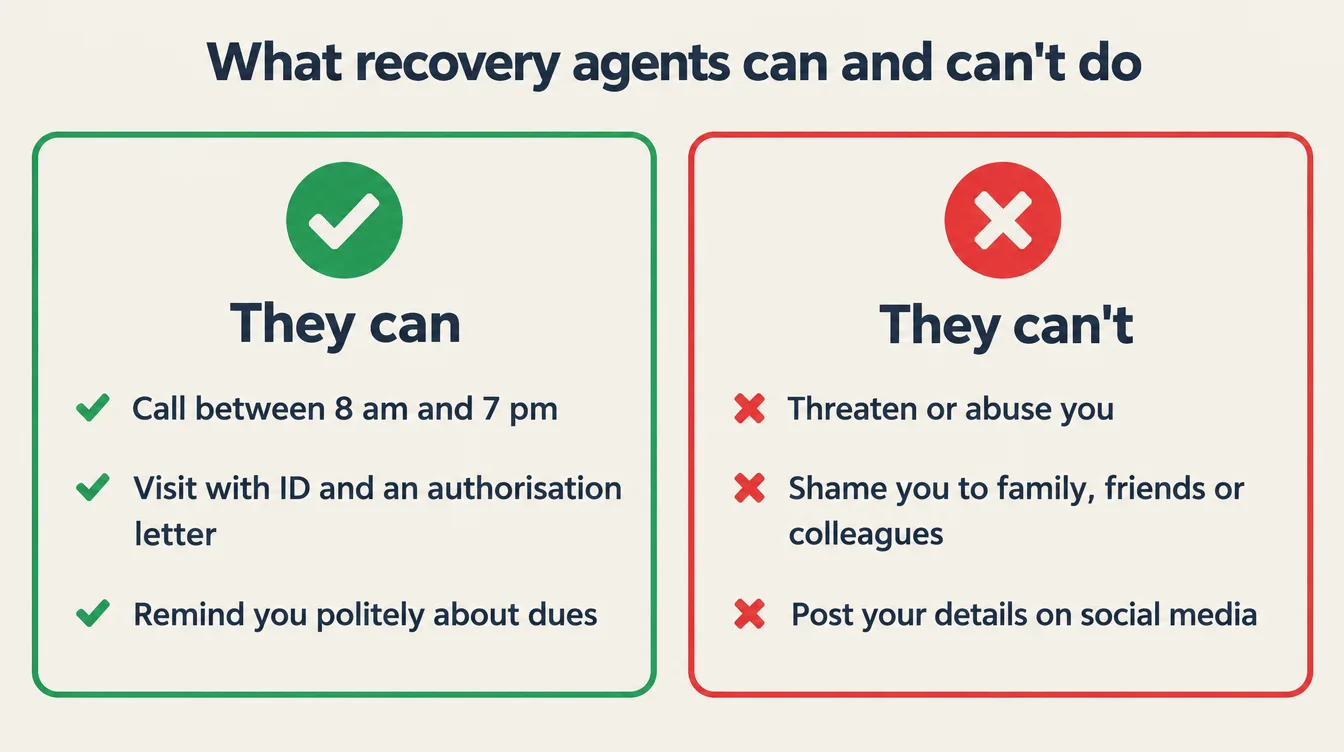
Under RBI rules that apply to banks and NBFCs, lenders and their recovery agents:
- Can only contact you between 8 am and 7 pm, unless you've asked otherwise. The RBI made this explicit in 2022.
- Must not use threats, abusive language or intimidation, verbal or physical.
- Must not harass your family, friends or colleagues, or shame you publicly, including on social media.
- Must not send inappropriate messages, or make anonymous calls.
- Are the lender's responsibility. If an agent breaks the rules, the bank or NBFC is answerable for it.
They can call you during those hours, send reminders, and visit to discuss the dues, politely.
What's new from 1 January 2027
On 6 August 2026, the RBI issued new, more detailed rules for how lenders recover loans. For commercial banks, they're in the Responsible Business Conduct Fourth Amendment Directions, 2026, and similar rules were issued for NBFCs and other lenders. From 1 January 2027:
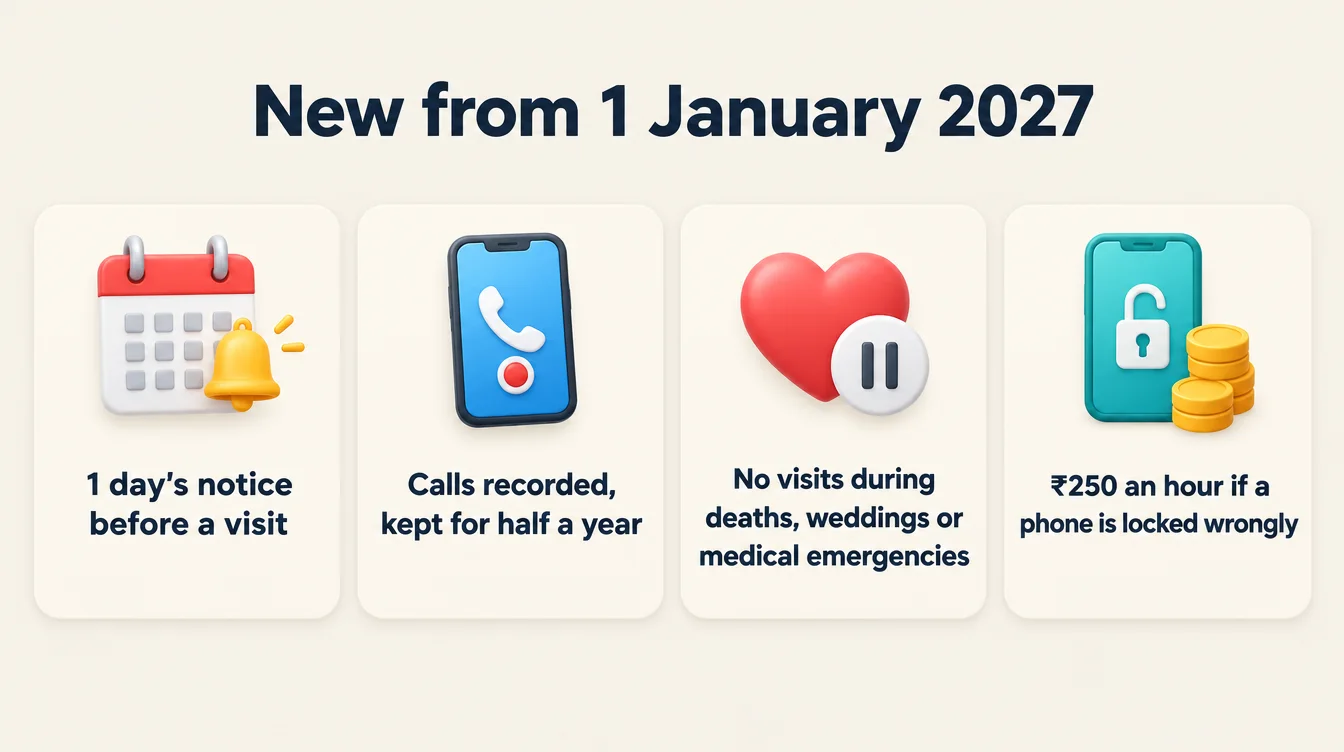
- One day's notice before a visit. The lender must tell you the recovery agency's name and details at least one day before the first visit.
- Agents must show ID, carry an authorisation letter and a copy of the lender's notice, with the agency's and the grievance officer's contact details.
- You choose the place. Visits should normally be at a place you choose. Home or office visits are allowed only if you miss two or more appointments in a row.
- No calls or visits at sensitive times, such as a death in the family, a medical emergency, a calamity or a wedding.
- No false threats. Agents can't mislead you about how much you owe or what will happen if you don't pay.
- Calls are recorded and kept for six months, and you should be told when a call is recorded.
- No targets or incentives that push agents towards harsh methods.
If your phone was bought on a loan
Some lenders can lock a phone, tablet or laptop that was bought on their loan. From 2027, the rules are strict:
- No restriction until the loan is at least 30 days past due, and only if your loan agreement allows it and you've had notices.
- Incoming calls, SMS and emergency SOS must always work.
- The lender can't read your contacts, messages, photos or location for recovery.
- The lock must be lifted within one hour of full repayment.
- If the phone is locked wrongly, or the unlock is delayed by the lender, they must pay you ₹250 an hour, up to the loan amount.
So if your phone stays locked for 8 hours after you've fully repaid, the lender owes you 8 × ₹250 = ₹2,000.
How to complain about harassment
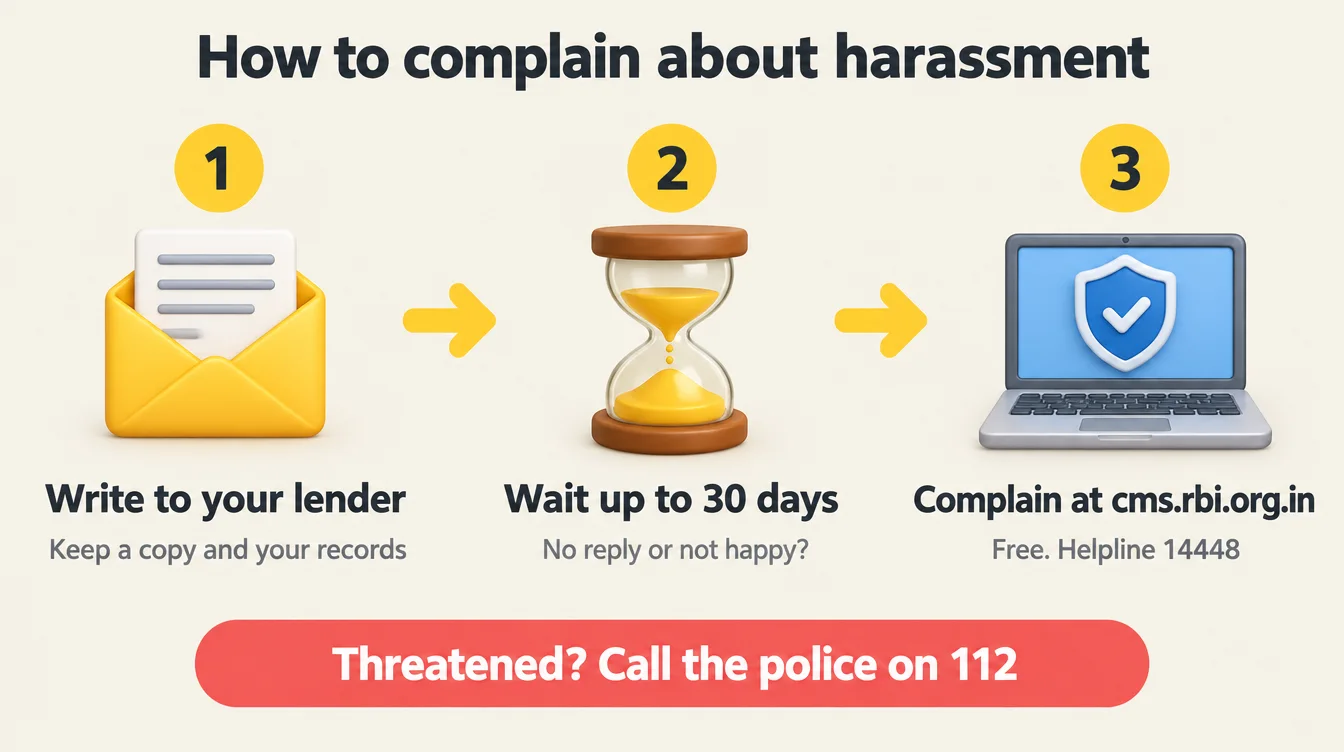
If an agent crosses the line, act on it. Keep records: date, time, phone number, what was said, and screenshots of messages.
- Write to the lender. Use the grievance officer's email or address on their website or loan papers. Describe what happened and attach your records. Keep a copy.
- Wait up to 30 days. If the lender doesn't reply, or you're not happy with the reply, go to step 3.
- Complain to the RBI Ombudsman at cms.rbi.org.in, within 90 days, or call the RBI helpline 14448 for help in English, Hindi and regional languages. It's free, and you don't need a lawyer.
If you're threatened with violence, call the police on 112. If it's a loan app that isn't linked to an RBI-regulated lender, report it on the RBI's Sachet portal and to the cybercrime helpline 1930.
What these rules don't do
Knowing your rights matters, but it's fair to be clear: these rules control how a lender recovers money, not whether it can. The dues still need to be paid, and penal charges, credit report marks and, for secured loans, legal recovery can still follow. We explain the timeline in what happens if you miss an EMI.
The best protection is to talk to your lender early. Ask about a longer tenure, a lower EMI for a few months or a payment plan, before the calls start.
You're not alone
Recovery calls can be frightening, and debt stress affects sleep, health and families. If it's getting too much, you can call Tele-MANAS on 14416, the government's free mental health helpline. Talking to someone helps.
The freeeme app helps you see every loan and due date in one place, so a bad month doesn't turn into missed EMIs, and you can plan a way out with your family.
Questions people ask
Can a recovery agent call me at night?
No. Recovery agents can only contact you between 8 am and 7 pm, unless you have asked them to call at another time.
Can a recovery agent call my family or office?
They must not harass, threaten or shame your relatives, friends or colleagues, and must not post your details on social media. If they do, complain to the lender in writing and then to the RBI.
Do these rules apply to loan apps?
They apply to banks, NBFCs and other RBI-regulated lenders, and the digital lending apps that work with them. If an app isn't linked to an RBI-regulated lender, it may be illegal: report it at sachet.rbi.org.in and to the cybercrime helpline 1930.
This is general information to help you understand your options, not financial, legal or tax advice. Rates, rules and charges change; check your lender's latest terms before you decide.