Who pays the loan if the borrower dies? A simple guide
Do children have to repay a parent's loan? What happens to a home loan, credit card or personal loan when the borrower dies, and what legal heirs really owe.

Losing a parent or spouse is hard enough. Then the calls start: the bank, the card company, a lender asking about an EMI. Many families worry that they now have to pay those loans from their own pockets. In most cases, they don't.
Here's who really pays when a borrower dies, loan by loan, in plain words. This is general information, not legal advice. For your family's situation, speak to the lender and, if needed, a lawyer.
The basic rule: the estate pays, not the family
When someone dies, their loans don't disappear, but they also don't automatically pass to their children or spouse. Debts are paid from the person's estate: the money, property and other assets they leave behind.
- Legal heirs (children, spouse, parents) are not personally liable for the loan from their own savings or salary.
- But if they inherit the property or money, the lender can recover the dues up to the value of what they inherit.
- If the estate is worth less than the debt, the remaining debt usually can't be recovered from heirs who weren't part of the loan.
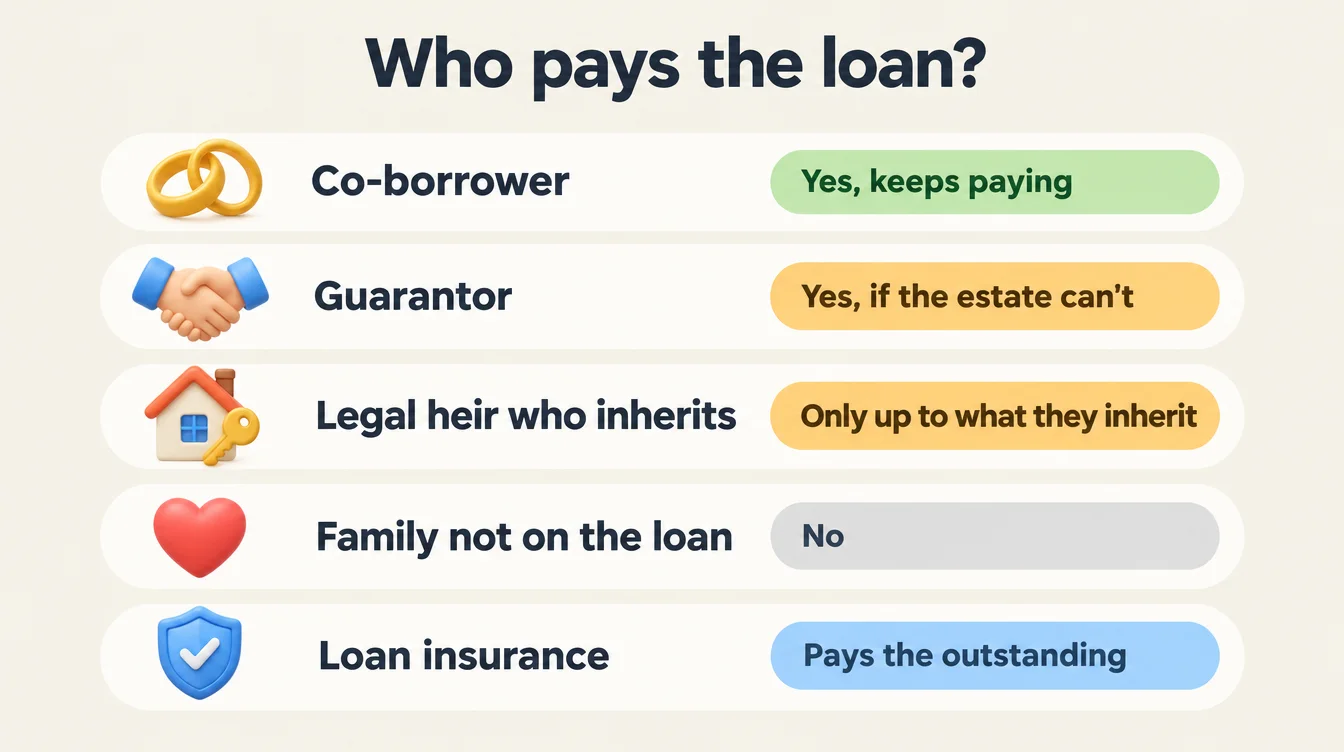
Who is responsible, at a glance
| Who | Do they have to pay? |
|---|---|
| Co-borrower (e.g. spouse on a joint home loan) | Yes. They're equally responsible and must continue the EMIs |
| Guarantor | Yes, if the borrower's estate and insurance don't cover the dues |
| Legal heir who inherits | Up to the value of what they inherit, not more |
| Family member not on the loan, who inherits nothing | No |
| Loan insurance (if taken) | Pays the outstanding, as per the policy |
Loan by loan
Home loan
- With loan insurance (often sold with the home loan): the insurer pays off what's left, as per the policy, and the family keeps the house.
- With a co-borrower: the co-borrower continues the EMIs.
- Neither: the legal heirs can repay the loan, or take it over if the lender agrees, to keep the house. If nobody repays, the lender can sell the property to recover the dues, and any money left after that goes to the heirs.
Car or two-wheeler loan
Similar to a home loan: the vehicle is the security. Heirs can repay and keep it, or the lender can take back and sell the vehicle.
Gold loan
The gold is the security. Heirs can repay the loan and collect the gold; otherwise, the lender can auction it after notice, and must return any surplus.
Personal loan and credit card
These are unsecured: there's no asset backing them. The lender can claim from the estate. If there's nothing in the estate, the debt usually can't be recovered from family members who weren't co-applicants or guarantors. Some personal loans also come with insurance that covers death.
A worked example
Rajesh dies with a home loan of ₹15 lakh still outstanding. Three possible situations:
- He had loan insurance covering ₹15 lakh. The insurer pays the bank. His family keeps the house with no loan left.
- His wife was a co-borrower and there was no insurance. She continues the EMIs. The family keeps the house.
- No insurance, no co-borrower. His children inherit the house, worth ₹40 lakh. To keep it, they need to repay ₹15 lakh to the bank. If they can't, the bank can sell the house, take its ₹15 lakh, and the remaining ₹25 lakh goes to the heirs.
Either way, the children don't have to pay from their own salaries beyond what they choose to, to keep the house.
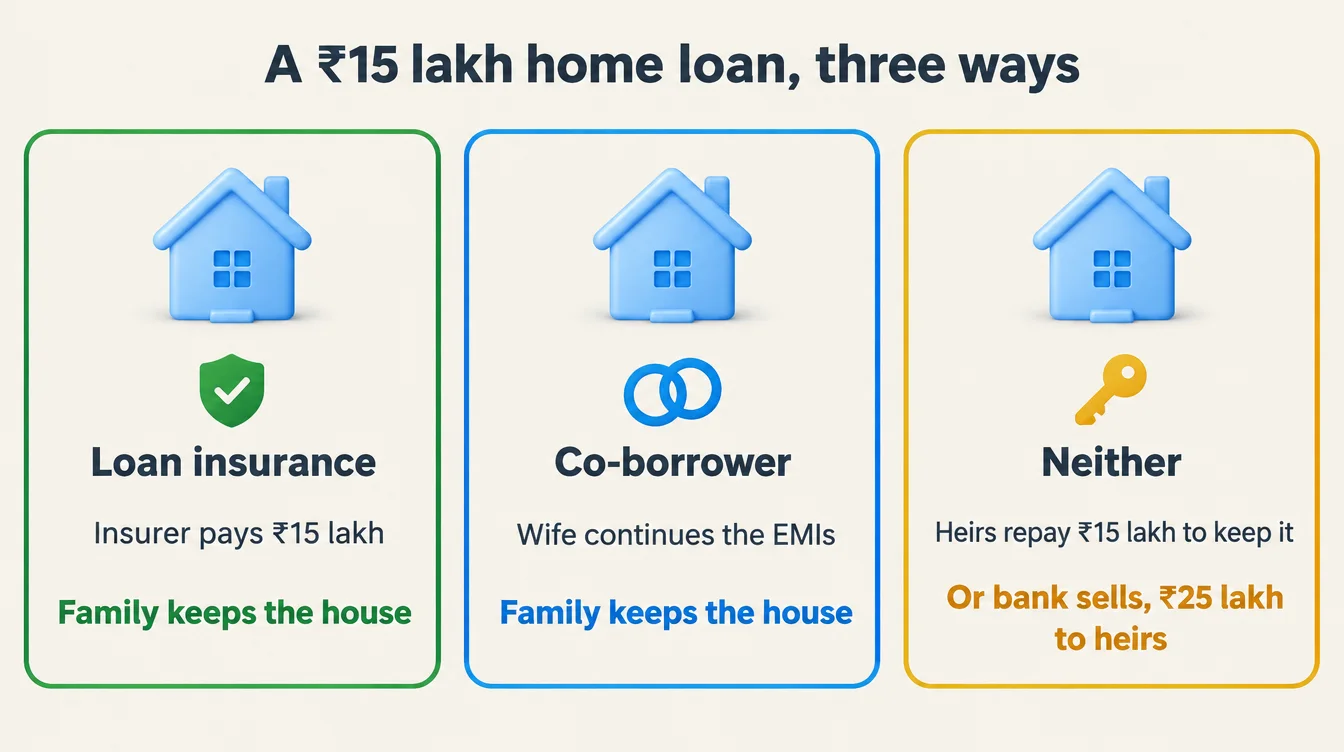
An illustrative example. Exact outcomes depend on the loan agreement, any insurance policy, the will and succession law.
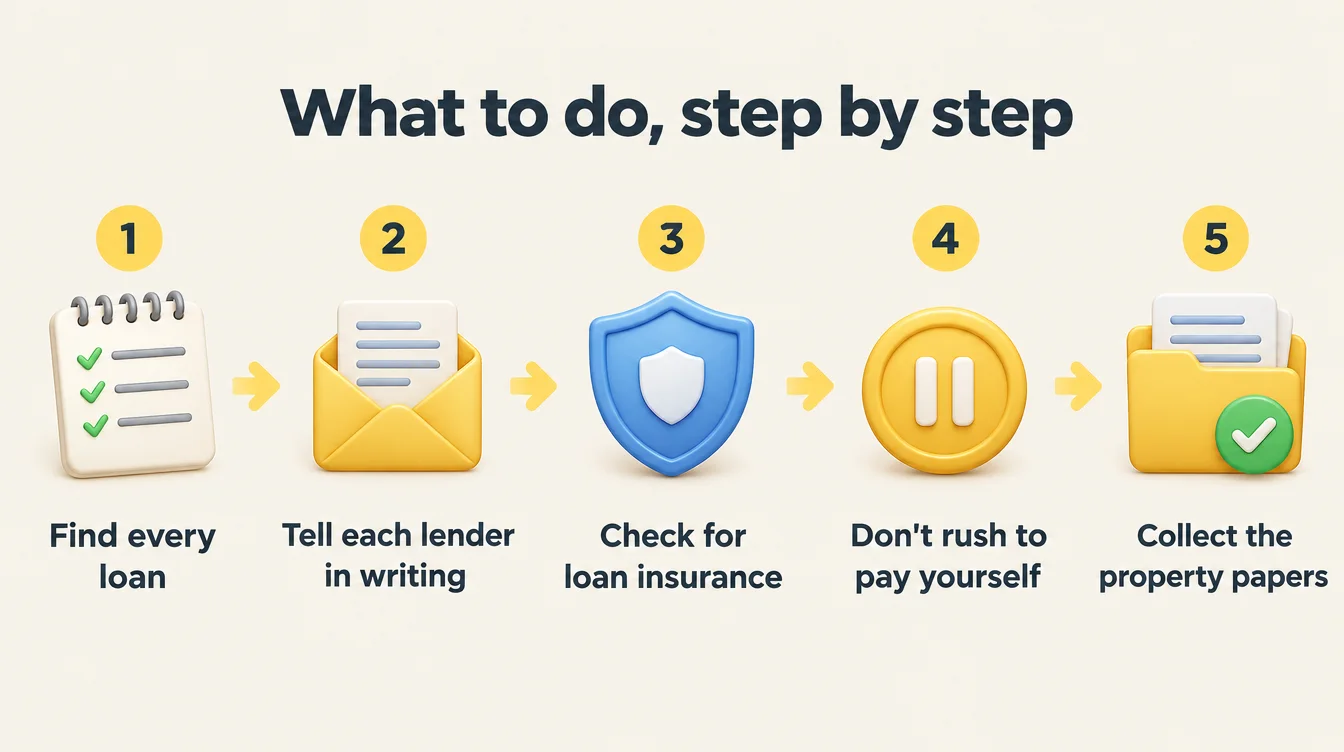
What to do if a family member dies with loans
- Find every loan. Check bank statements, card statements, loan papers, emails and the person's credit report.
- Tell each lender in writing, with a copy of the death certificate. Ask for the outstanding amount.
- Check for insurance on each loan, and file a claim with the insurer.
- Don't pay from your own money in a hurry. Understand first whether you're a co-borrower, a guarantor, or only a legal heir.
- Ask the lender for its process for legal heirs, including what documents they need, such as a legal heir certificate or succession certificate.
- After the loan is cleared, collect the property papers. Under RBI rules, lenders must return original property documents within 30 days of full repayment, or pay ₹5,000 for every day of delay, and must have a published procedure for returning documents to legal heirs (Moneylife).
If recovery agents call the family
Recovery agents must not threaten, harass or shame family members, and calls are only allowed between 8 am and 7 pm. Family members who aren't on the loan can calmly say so, and ask the lender to write to them about the estate. If agents cross the line, see loan recovery agents: your rights.
How to protect your own family
- Keep one list of every loan, with lender, amount and EMI, so your family isn't left searching. Our guide on how to manage multiple EMIs shows how.
- Tell your spouse or a trusted person about your loans. See how to talk to your spouse about debt.
- Consider loan or term insurance that would cover big loans like a home loan.
- Name nominees on your bank accounts and policies, and make a will.
The short version
- Loans are paid from the estate, not from the family's own money.
- Co-borrowers and guarantors are responsible; legal heirs only up to what they inherit.
- Secured loans (home, car, gold) can be recovered by selling the asset; heirs can repay to keep it.
- Check for loan insurance first: it often clears the loan.
- Keep a list of your loans and talk to your family, so they're never left guessing.
The freeeme app keeps every family loan in one place and lets you name a nominee, so the people you love know exactly what's owed, and to whom.
Questions people ask
Do children have to pay their parent's loan after death?
Not from their own money, unless they were a co-borrower or guarantor. The loan is repaid from what the parent left behind, their estate. Legal heirs who inherit property may have to clear the debt up to the value of what they inherit, but no more.
What happens to a home loan when the borrower dies?
If there was loan insurance, the insurer usually pays off the outstanding amount. If not, a co-borrower continues the EMIs, or the legal heirs can repay the loan to keep the house. If nobody repays, the lender can recover the dues by selling the property.
Is credit card debt written off when someone dies?
It isn't automatically written off. The bank can claim it from the person's estate. If the estate has no money or assets, the bank usually can't recover it from family members who weren't co-applicants or guarantors.
This is general information to help you understand your options, not financial, legal or tax advice. Rates, rules and charges change; check your lender's latest terms before you decide.