Flat rate vs reducing rate: why a 10% loan can cost 18%
A '10% flat' loan really costs about 18% a year. ₹1 lakh worked out both ways, how to spot a flat rate, and the one question to ask before you sign.

The showroom says: "Bike loan at just 10% interest." The bank down the road says: "Personal loan at 14%." The showroom sounds cheaper. It might not be. If the 10% is a "flat rate", it can actually cost you about 18% a year.
Here's the difference between flat and reducing rates, ₹1 lakh worked out both ways, and how to spot the trap.
Flat rate vs reducing rate, in one line each
- Flat rate: interest is charged on the full original loan for the whole tenure, even though you're repaying it every month.
- Reducing rate (also called reducing balance or diminishing balance): interest is charged only on what you still owe. As the loan shrinks, so does the interest.
Most bank home loans, car loans and personal loans use reducing rates. Flat rates often show up in consumer durable loans, two-wheeler loans, some small personal loans and informal lending.
₹1 lakh at "10%" for 2 years, worked out both ways
| Flat 10% | Reducing 10% | |
|---|---|---|
| How interest is worked out | ₹1,00,000 × 10% × 2 years | Monthly, on what's left |
| Total interest | ₹20,000 | ₹10,748 |
| Monthly EMI | ₹5,000 | ₹4,614 |
| Real yearly rate (reducing) | about 18.2% | 10% |
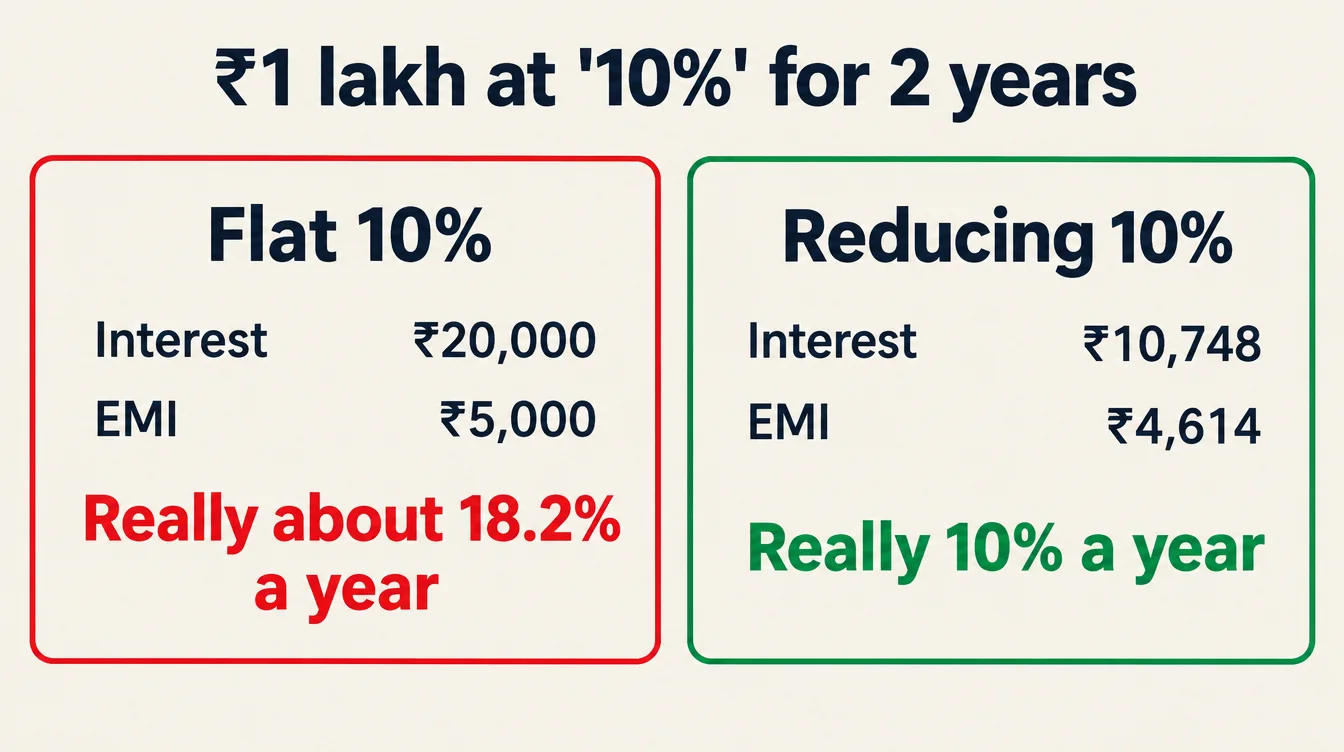
Same "10%", but the flat-rate loan costs ₹9,252 more, almost double the interest.
Worked out with the standard EMI formula; the real rate is the reducing rate that gives the same EMI. Fees and GST would add to both.
Why a flat rate costs so much more
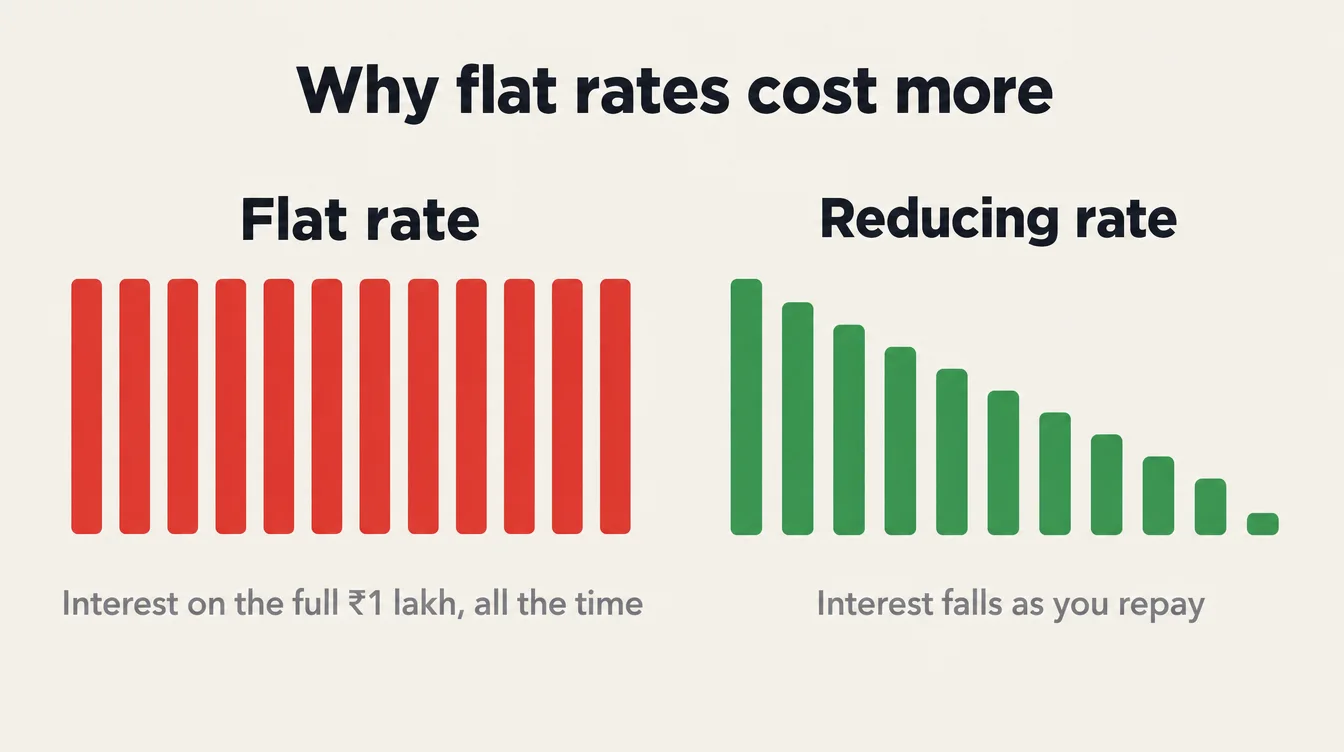
With a flat rate, you're charged interest on ₹1 lakh for the full 2 years. But you're paying back part of the loan every month, so halfway through, you really owe only about half. You keep paying interest on money you've already returned.
A quick rule of thumb
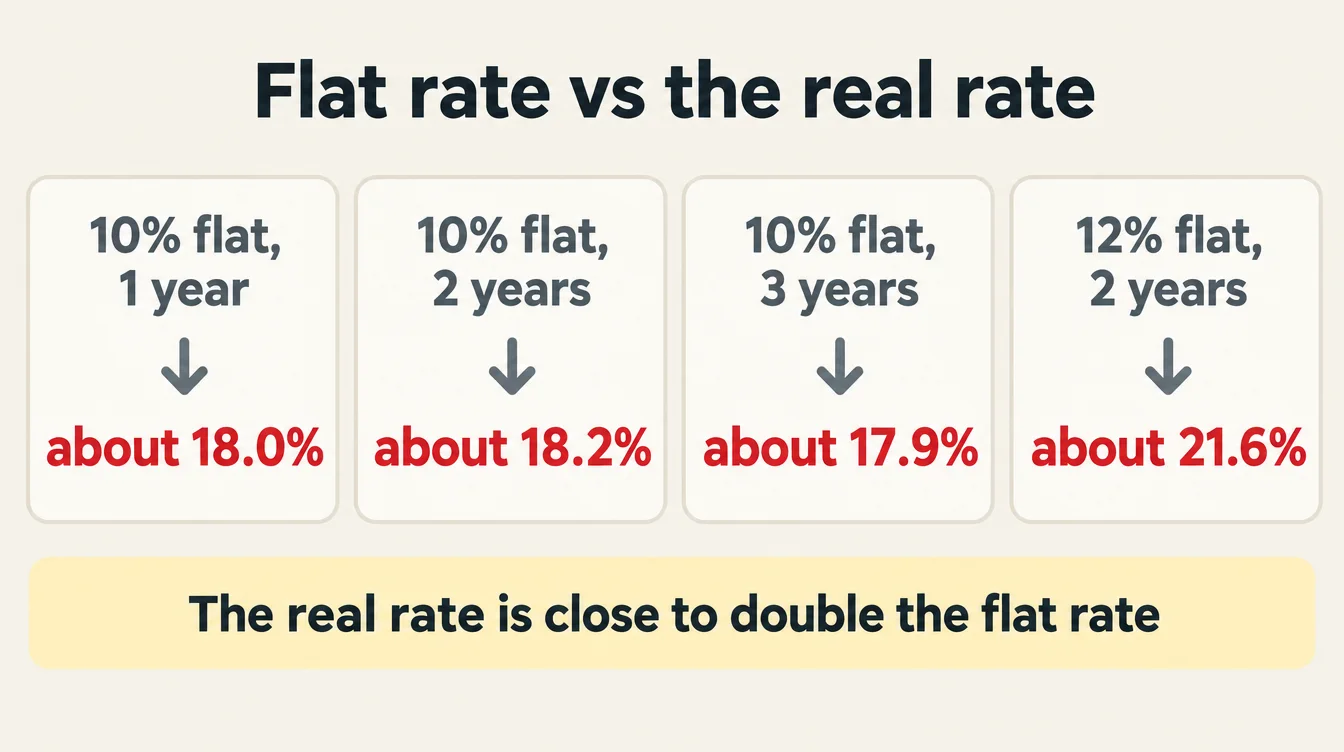
For typical loans of 1 to 3 years, the real reducing rate is close to double the flat rate:
| Quoted flat rate | Tenure | Real reducing rate |
|---|---|---|
| 10% | 1 year | about 18.0% |
| 10% | 2 years | about 18.2% |
| 10% | 3 years | about 17.9% |
| 12% | 2 years | about 21.6% |
So that "10% bike loan" is really more expensive than the "14% personal loan" from the bank, if the bank's 14% is on a reducing balance.
How to spot a flat rate
- The EMI seems high for the rate quoted. Use our guide on how EMI is calculated to check, or this spreadsheet formula:
=PMT(10%/12, 24, -100000)gives the reducing-rate EMI. If the lender's EMI is clearly higher, ask why. - The interest is shown as one simple number, like "₹20,000 interest on ₹1 lakh for 2 years", that's exactly rate × amount × years.
- The words "flat", "add-on" or "fixed interest of ₹X" appear in the offer.
The one question to ask
Before you sign, ask:
"Is this rate flat or reducing? What's the annual percentage rate (APR) in the Key Fact Statement?"
Under RBI rules for retail and MSME loans, lenders must give you a Key Fact Statement (KFS) with the all-in annual percentage rate, including fees. That's the number to compare across offers, not the headline rate.
Other costs to add
Whichever rate you're quoted, also check:
- Processing fee, plus GST
- Insurance added to the loan
- Foreclosure charges if you close early. See personal loan foreclosure charges.
- Whether a "No cost EMI" is really free. See No cost EMI hidden charges.
The short version
- A flat rate charges interest on the full loan all the time; a reducing rate only on what you owe.
- A 10% flat rate is really about 18% a year for typical 1–3 year loans.
- On ₹1 lakh for 2 years, flat 10% costs ₹20,000 in interest; reducing 10% costs ₹10,748.
- Always ask: "Flat or reducing? What's the APR?"
The freeeme app works out the real cost of every loan you add, so you can compare offers fairly and see what each one does to your debt-free date.
Questions people ask
What is the difference between flat and reducing interest rates?
A flat rate charges interest on the full original loan for the whole tenure, even as you repay it. A reducing rate charges interest only on what you still owe each month. For the same quoted rate, a flat-rate loan costs much more.
How do I convert a flat rate to a reducing rate?
A rough rule: for typical 1–3 year loans, the real reducing rate is close to double the flat rate. For an exact figure, calculate the EMI and use a spreadsheet's RATE function, or ask the lender for the annualised rate (APR) in the Key Fact Statement.
Are flat-rate loans allowed in India?
Some lenders still quote flat rates, especially for consumer durables, two-wheelers and small loans. Under RBI rules for retail and MSME loans, lenders must give you a Key Fact Statement showing the all-in annual percentage rate (APR), so you can compare loans fairly.
This is general information to help you understand your options, not financial, legal or tax advice. Rates, rules and charges change; check your lender's latest terms before you decide.