42% of phones in India are bought on EMI. What it means for you
Counterpoint expects 42% of smartphones sold in India in 2026 to be bought on finance. What that means for your family budget, with a ₹ example.

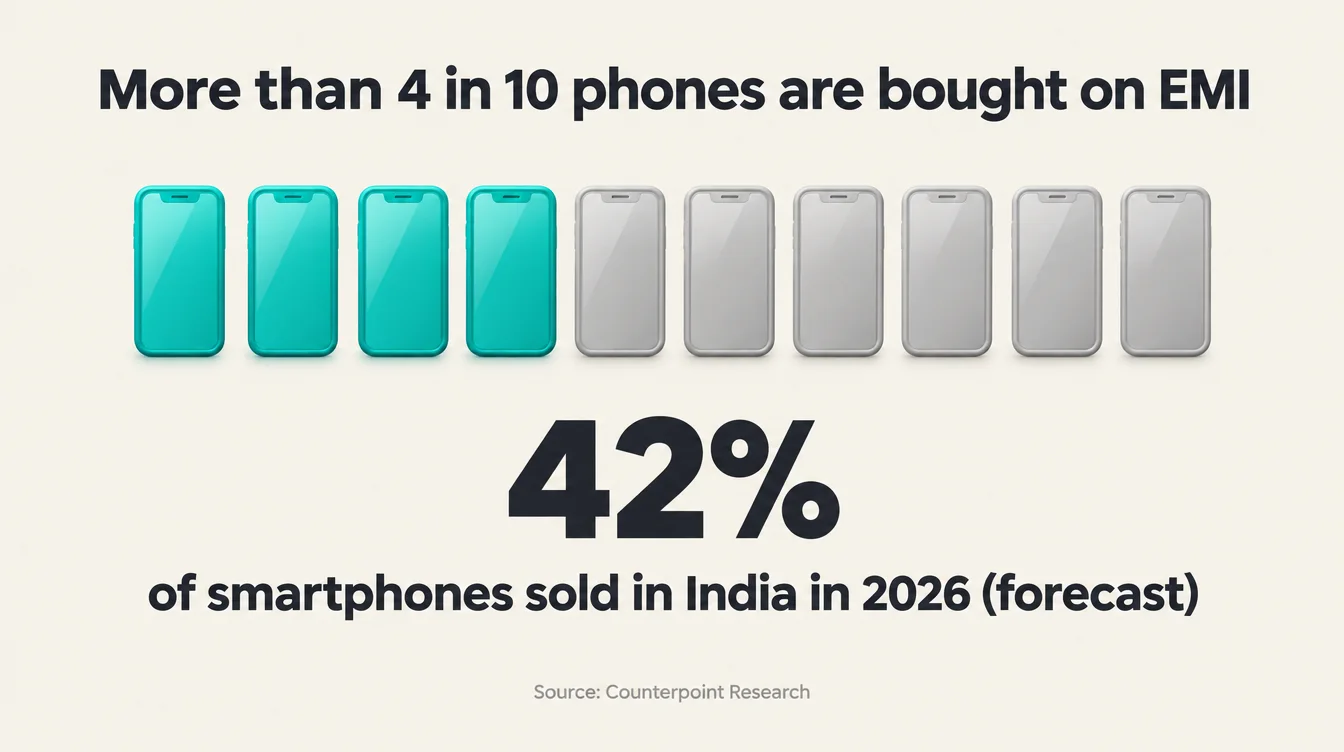
More than 4 in every 10 smartphones sold in India this year are expected to be bought on finance. Counterpoint Research forecasts that financing will make up 42% of India's smartphone sales in 2026, driven by rising phone prices. That includes NBFC loans at the store and credit or debit card EMIs.
Buying a phone on EMI isn't wrong. But it's now one of the most common ways Indian families take on debt, often without counting it as a loan at all. Here's what the numbers say, and what it means for your budget.
What the numbers say
- 42% of smartphone sales are expected to be financed in 2026.
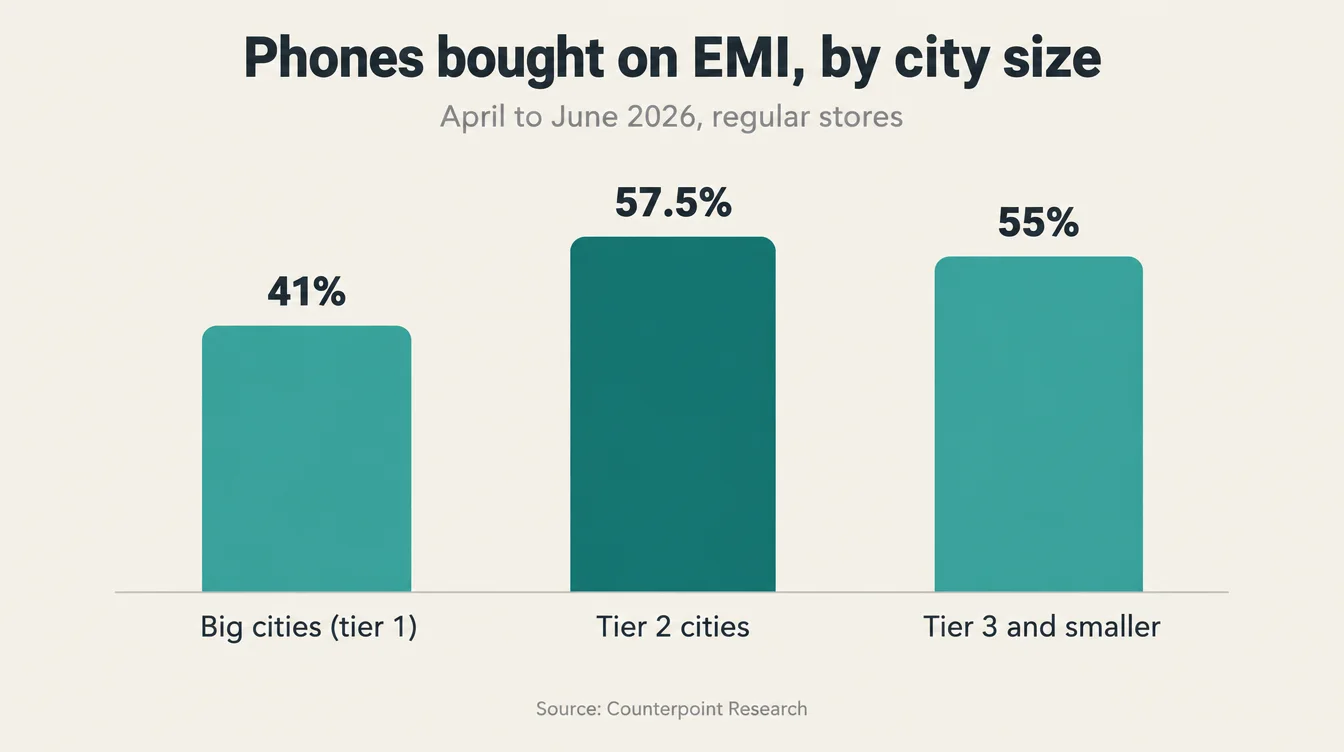
- Smaller cities lead. In the second quarter of 2026, 57.5% of phones bought in tier 2 cities through regular stores were on EMI, up from 44% a year earlier. In tier 3 and smaller towns it was 55%, and in the biggest cities 41%.
- EMIs are getting longer. The average phone financing tenure reached about 10 months, and some brands and lenders now offer plans of up to 30 months.
Why it matters for your family
A phone EMI feels small. ₹2,000 or ₹3,000 a month doesn't look like "debt". But three things make phone EMIs easy to underestimate:
1. They stack up. One phone for you, one for your spouse, maybe one for a child's online classes. Each EMI looks small; together they're a real monthly bill.
2. Long EMIs can outlast the phone. A 30-month EMI runs for two and a half years. If the phone breaks, gets lost or feels old before then, many people buy the next one on EMI while still paying for the last.
3. They count as loans. A phone on an NBFC loan or card EMI shows on your credit report. A missed ₹2,000 EMI can hurt your score just like a missed home loan EMI, and comes with bounce and penal charges.
A worked example: two phones, one budget
A family takes home ₹40,000 a month. They buy two phones this festive season:
| Phone | Price | EMI plan | Monthly EMI |
|---|---|---|---|
| Phone 1 | ₹60,000 | 30 months | ₹2,000 |
| Phone 2 | ₹30,000 | 10 months | ₹3,000 |
| Total | ₹90,000 | ₹5,000 |
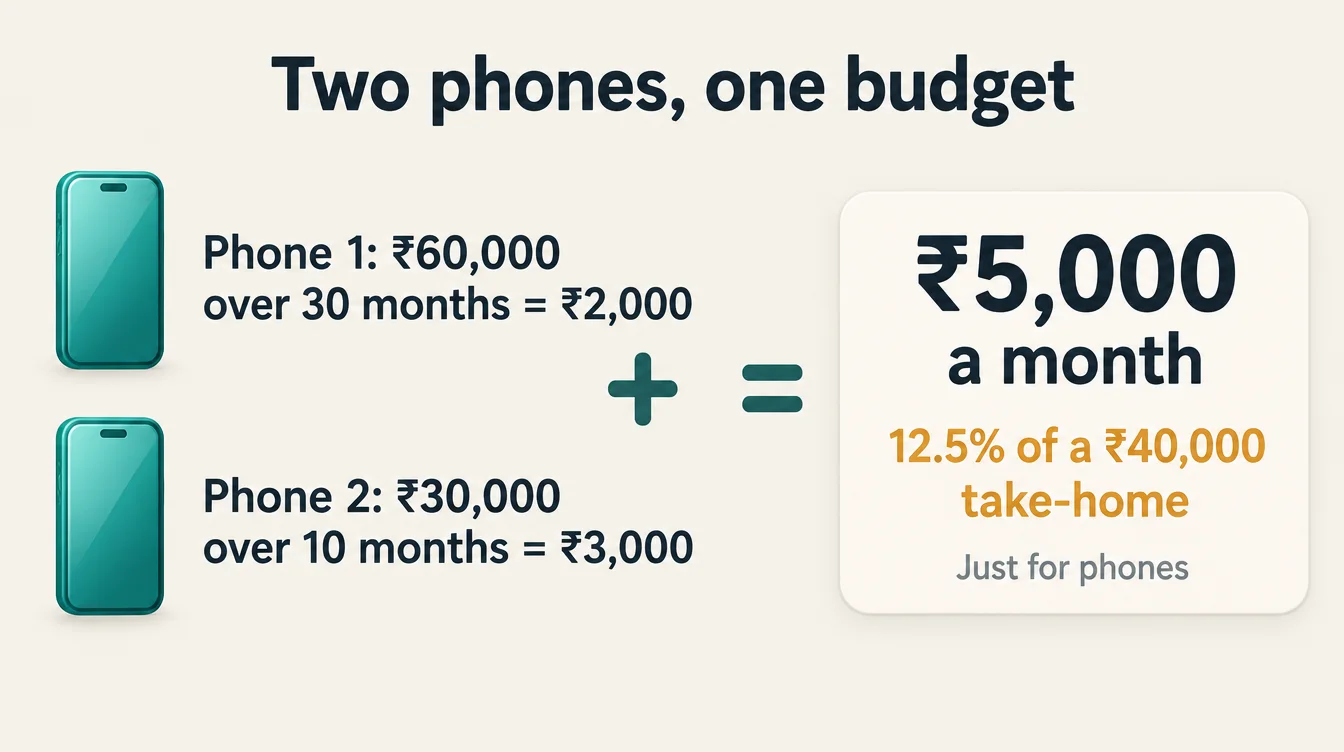
That's ₹5,000 a month, or 12.5% of take-home pay, just for phones, before rent, school fees or any other loan. If the family already pays other EMIs, they could easily cross the comfortable 30% limit.
Example EMIs assume zero-interest plans, so they're simply the price divided by the months. Interest, processing fees or GST would make them higher.
Before you buy your next phone on EMI
- Compare the full-payment price. "No cost" EMI often isn't fully free once you count GST on interest, processing fees and lost discounts. We worked it out in Is No cost EMI really free?
- Pick a tenure shorter than the phone's life. If you usually change phones every two years, avoid a 30-month EMI.
- Add it to your list. Write the new EMI next to every other EMI you pay, and check the total against your take-home pay.
- Don't stack a new phone EMI on an old one. Wait until the last phone is paid off.
- Pay on time, every time. Set the EMI date right after salary day.
The bigger picture
Easy finance has made good phones affordable for millions of families, and that's a real benefit. The risk is that small EMIs, phones, appliances and pay-later, quietly add up to a big monthly bill that nobody in the house sees in one place.
The freeeme app puts every EMI, even the small ones, in one list, shows what share of your income they take, and tells you the month your family will be debt-free.
Questions people ask
How many smartphones in India are bought on EMI?
Counterpoint Research expects financing to account for 42% of smartphone sales in India in 2026, including NBFC loans and credit or debit card EMIs. In smaller cities the share is even higher.
Is it a good idea to buy a phone on EMI?
It can be, if the total cost isn't higher than paying in full, the EMI ends well before you're likely to replace the phone, and all your EMIs together stay under about 30% of take-home pay. Otherwise, saving up first is usually cheaper.
Does a phone EMI affect my credit score?
Yes. A phone bought on an NBFC loan or card EMI is credit, and it shows on your credit report. Paying on time helps your score; a missed EMI hurts it, even on a small amount.
This is general information to help you understand your options, not financial, legal or tax advice. Rates, rules and charges change; check your lender's latest terms before you decide.