Is 'No cost EMI' really free? The hidden charges, explained
Buying on No cost EMI this Diwali? How the discount and interest cancel out, the charges that don't, and a ₹30,000 phone worked out in full.

Diwali sales are on, and almost every phone, TV and fridge comes with the same three words: No cost EMI. Pay in 6 easy instalments, zero interest. It sounds like free money.
It isn't quite. "No cost" usually means the interest is hidden, not removed. In fact, the RBI said back in 2013 that "the very concept of zero percent interest is non-existent". Here's how it really works, and what it costs, with a ₹30,000 phone as an example.
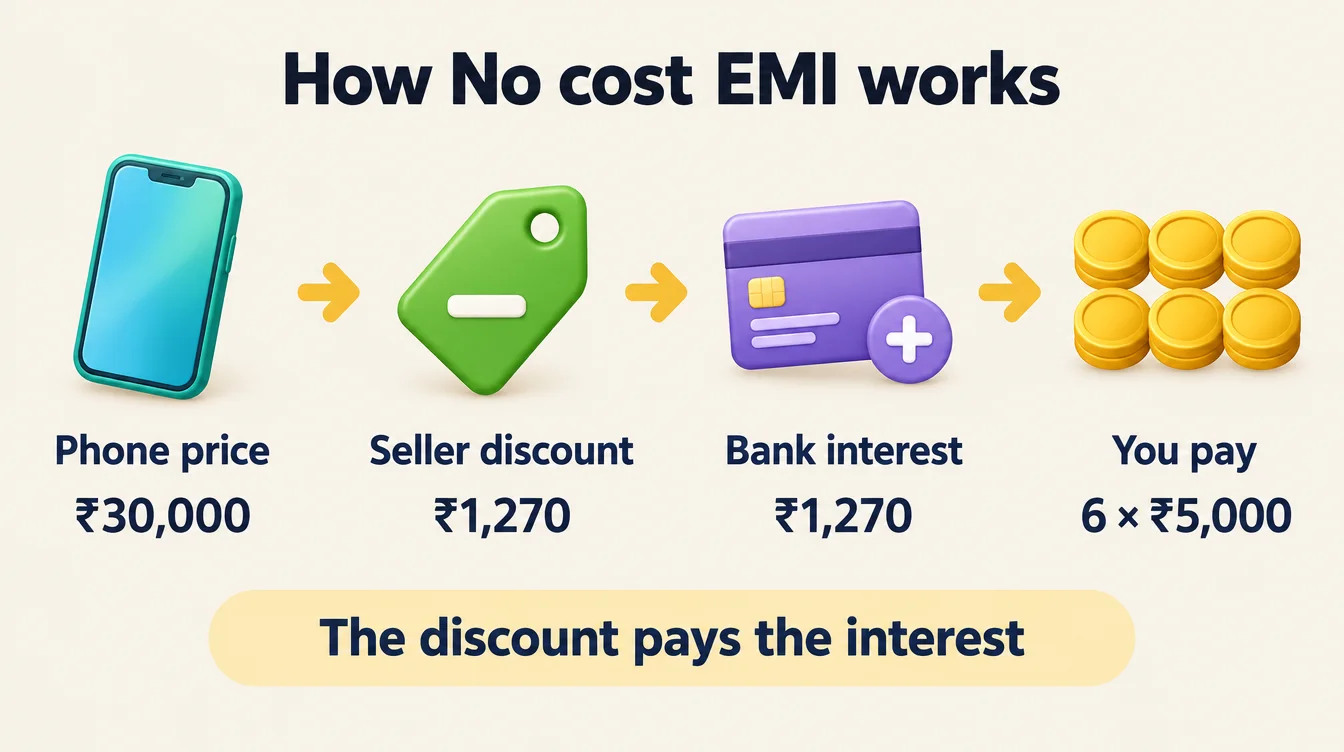
How No cost EMI actually works
When you choose No cost EMI, you're taking a small loan from your bank or a finance company. That loan does charge interest. To make the total come out to the sticker price, the seller or brand gives you an upfront discount equal to the interest.
So the discount pays the interest, and the EMIs add up to the price you saw. That part really is "no cost". The catch is everything around it.
A ₹30,000 phone, worked out in full
Say you buy a ₹30,000 phone on a 6-month No cost EMI on your credit card, at 15% interest a year:
- The seller gives a ₹1,270 discount, so the bank lends you ₹28,730.
- The bank charges ₹1,270 interest over 6 months, and you pay 6 EMIs of ₹5,000. So far, exactly ₹30,000.
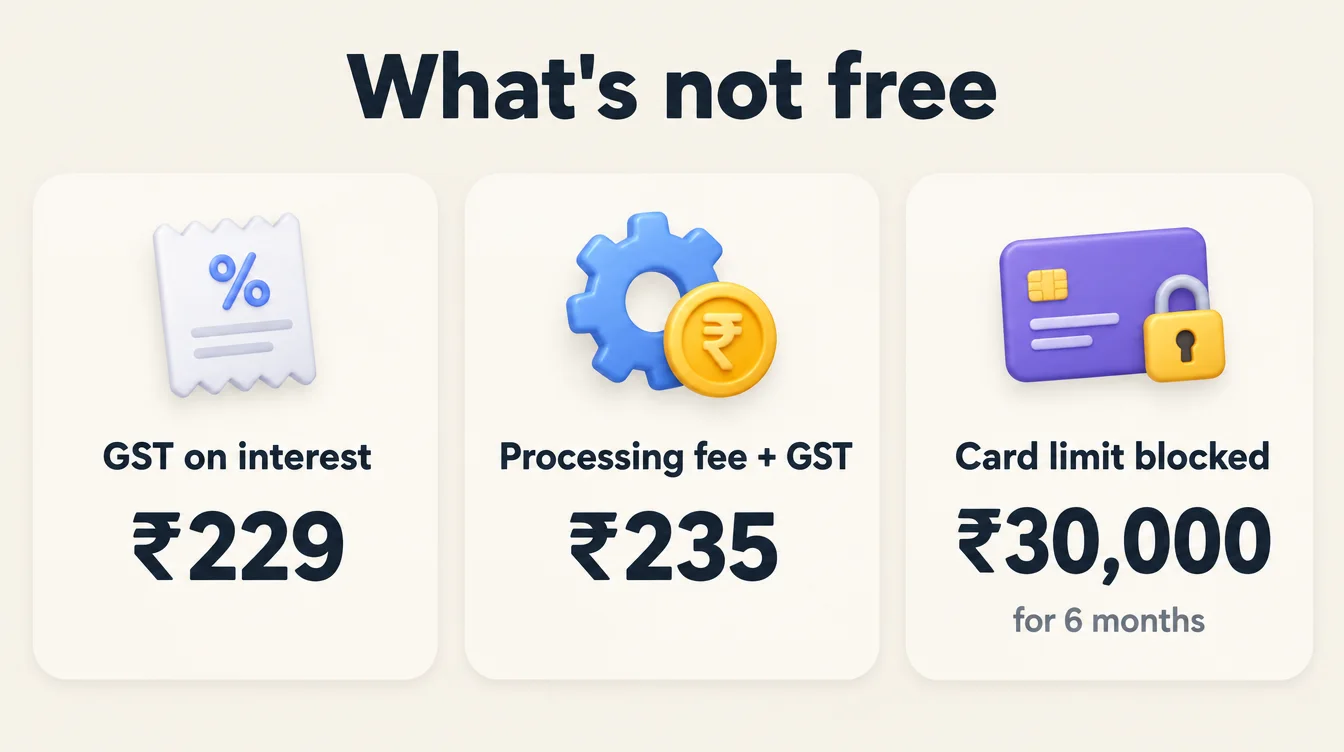
- GST at 18% on the interest: about ₹229 extra. The discount covers the interest, but not the GST on it.
- Processing fee: many banks charge one, often ₹199 or more, plus GST. That's about ₹235.
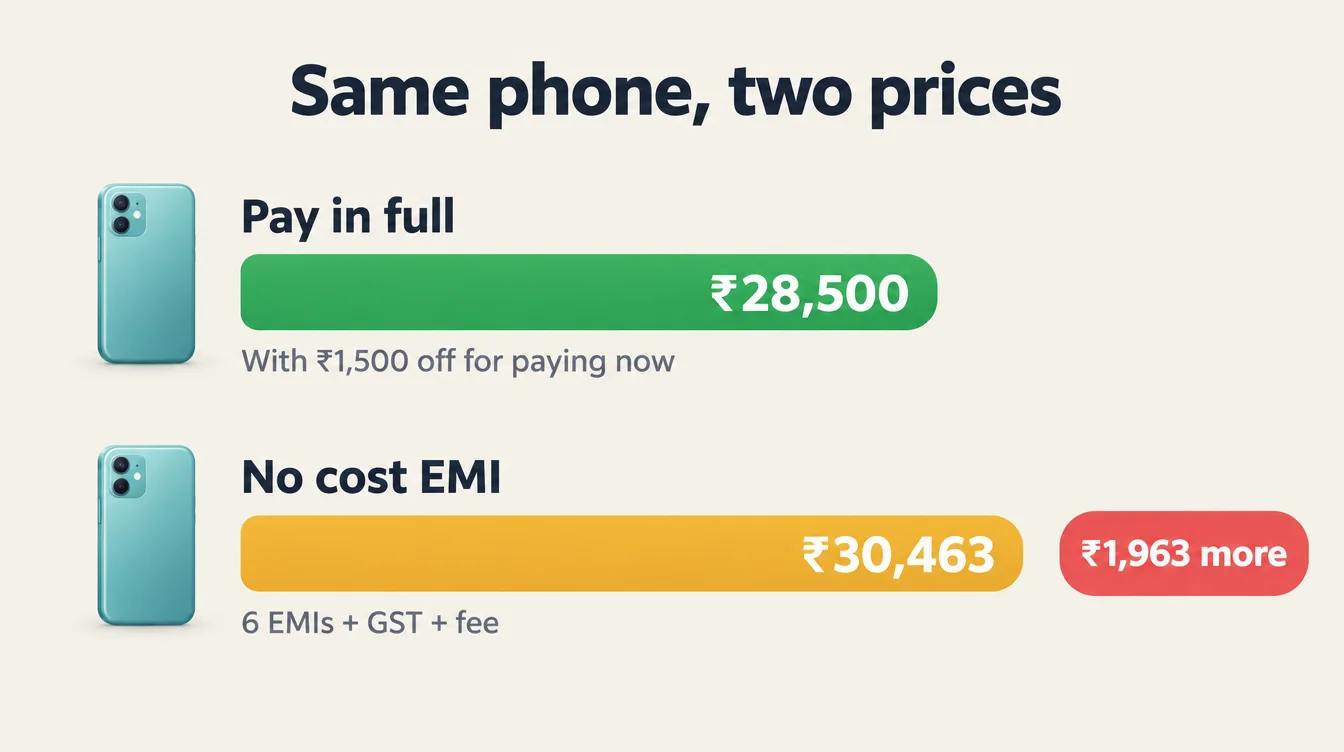
What you really pay: about ₹30,463. That's ₹463 more than the "no cost" price.
These figures are estimates; interest, fees and GST vary by bank and seller.
The costs nobody mentions
1. The discount you give up. Many sales offer an instant discount or cashback only if you pay in full. If paying in full gets you ₹1,500 off, the phone costs ₹28,500. On No cost EMI it costs about ₹30,463. That's a difference of ₹1,963.
2. Your card limit is blocked. The whole ₹30,000 is held against your credit limit until the last EMI. That can push up your credit utilisation, which may lower your credit score for a while.
3. One more EMI on the list. ₹5,000 a month for 6 months is easy to agree to at the checkout. It's harder when it's your fourth or fifth EMI, due in the same week as rent. Small EMIs add up fast, as we showed in how to manage multiple EMIs.
4. Missing a payment gets expensive. If an EMI is missed, late fees, penal interest and GST apply, and the miss shows up on your credit report. Some banks also charge a fee if you close the EMI early.
When No cost EMI does make sense
It can be a fair deal if all of these are true:
- There's no extra discount for paying in full.
- The processing fee is small, or zero.
- You'd have bought the item anyway, at this price.
- The new EMI keeps your total EMIs comfortably under about 30–50% of take-home pay.
- You're sure you can pay every EMI on time.
If any of these is false, saving up and paying in full is usually cheaper.
A 30-second checkout test
Before you tap "No cost EMI", ask three questions:
- What's the price if I pay in full right now? Compare it with the EMI total plus fees.
- What's the processing fee, and is there GST on the interest? It's usually in the offer's terms.
- What will my total EMIs be next month? Add this one to the rest.
The freeeme app keeps every EMI, big and small, in one list, so you can see what one more EMI does to your family's debt-free date before you say yes.
Questions people ask
Is No cost EMI really interest free?
Not exactly. The bank still charges interest. The seller or brand usually gives you a discount equal to that interest, so the two cancel out. But GST on the interest and any processing fee are still yours to pay.
Does No cost EMI affect my credit score?
It is a loan, so it shows up on your credit report. On a credit card, the full purchase amount also blocks your card limit until the EMIs are paid, which can raise your credit utilisation. Paying every EMI on time helps your score; missing one hurts it.
When does No cost EMI make sense?
When you were going to pay the full price anyway, there is no extra discount for paying in one go, the fees are small, and the new EMI fits comfortably in your monthly budget alongside your other EMIs.
This is general information to help you understand your options, not financial, legal or tax advice. Rates, rules and charges change; check your lender's latest terms before you decide.