RBI rate hike 2026: why your home loan got longer, not your EMI
After the October 2026 repo rate hike, many banks kept EMIs the same and quietly added months to home loans. How to check yours, and your three options in rupees.

On 7 October 2026, the RBI raised the repo rate by 0.25%, to 5.50%. It was the first increase since February 2023, and many banks passed it on to floating-rate loans from the very next day.
If you have a home loan, you may not have noticed anything. Your EMI is probably the same. That's because, in most cases, the bank didn't raise your EMI. It made your loan longer. Here's how to check, and what each option costs in rupees.
Why your EMI didn't change, but your loan did
Most home loans in India have a floating rate linked to an external benchmark, usually the repo rate. When the repo rate rises, your loan's rate rises too at its next reset.
To keep your monthly budget the same, banks usually keep the EMI fixed and add more EMIs at the end. You don't feel it this month, but you pay for it at the end, with extra months and extra interest.
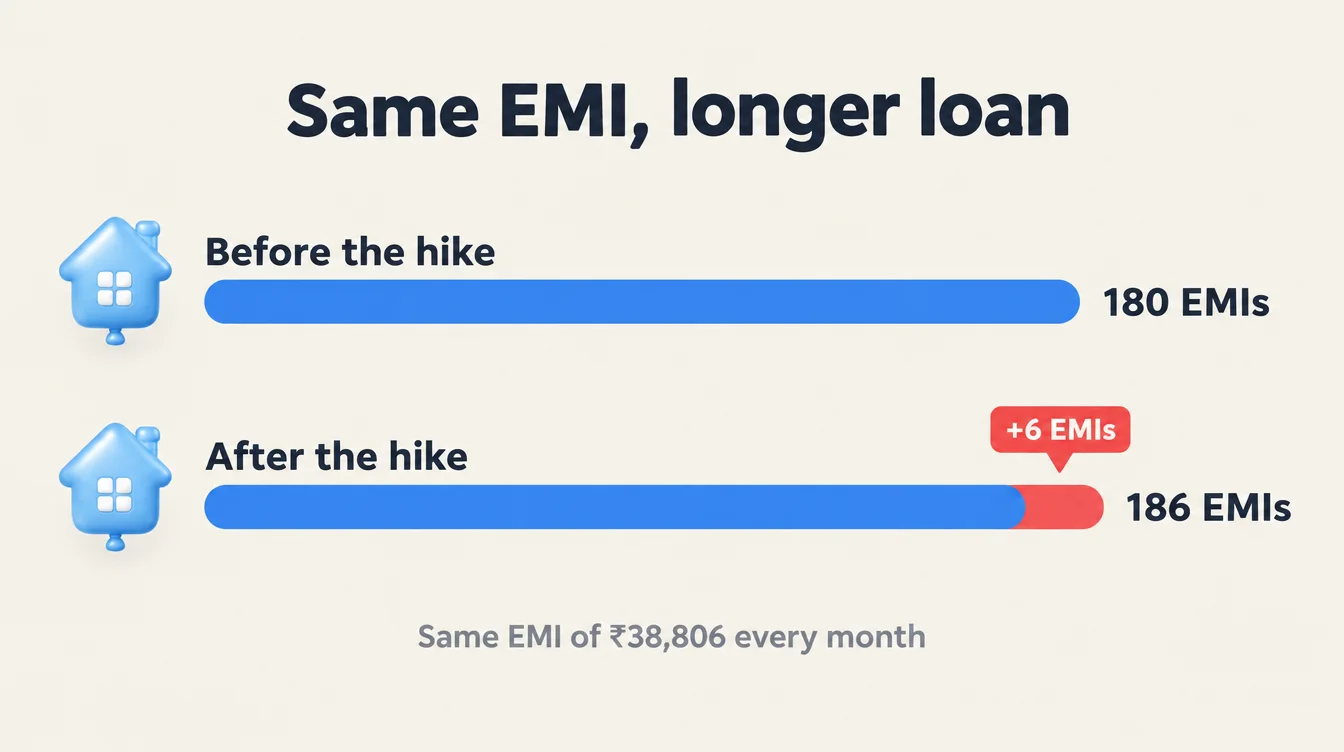
A worked example
Meet the Iyers. They have ₹40 lakh left on their home loan, with 15 years (180 EMIs) to go. Their rate goes from 8.25% to 8.50%.
- Before the hike, their EMI is ₹38,806.
- With the same EMI at the new rate, the loan now needs 186 EMIs: 6 more months.
- Those 6 extra months cost about ₹2.16 lakh more in interest over the life of the loan.
A 0.25% change sounds small. On a large loan over many years, it isn't.
Your three options
| Option | EMI | EMIs left | Extra interest vs before the hike |
|---|---|---|---|
| Keep the EMI, let the loan get longer | ₹38,806 | 186 | about ₹2.16 lakh more |
| Raise the EMI, keep the same end date | ₹39,390 | 180 | about ₹1.05 lakh more |
| Keep the EMI, prepay ₹1 lakh now | ₹38,806 | 177 | about ₹41,000 less |
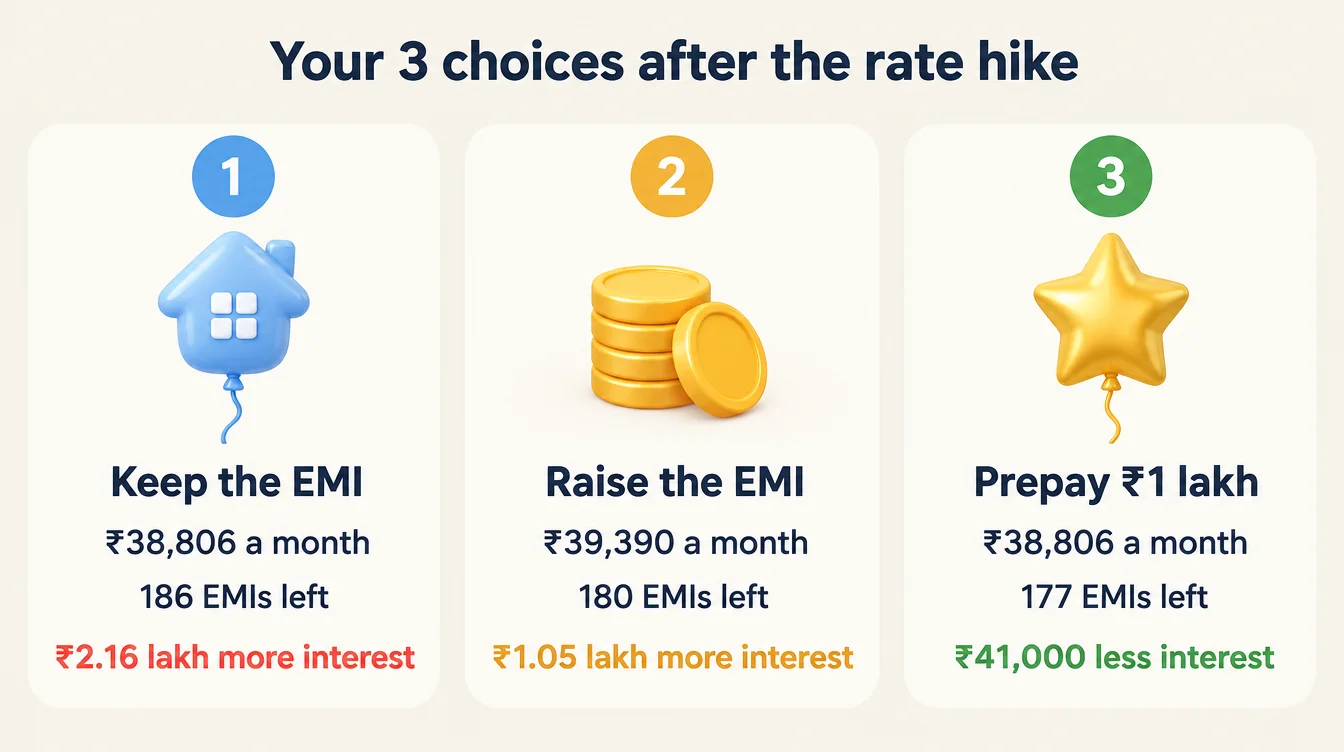
1. Keep the EMI (what usually happens by default). Easiest on your monthly budget, but the most expensive overall.
2. Raise the EMI by ₹584 a month. Your loan ends on the same date as before, and you pay about ₹1.1 lakh less interest than option 1. If ₹584 a month fits your budget, this is usually the cheaper choice.
3. Prepay a lump sum. A one-time ₹1 lakh part-prepayment, from a bonus or savings you don't need for emergencies, more than cancels out the hike. The Iyers would finish 3 months earlier than their original plan and pay less interest than before the hike. Floating-rate home loans taken by individuals usually have no prepayment charges, but check your loan agreement.
These figures are estimates: interest is worked out monthly on the balance, and your bank may calculate it slightly differently.
How to check your new loan end date
- Open your latest home loan statement, in the bank's app or net banking.
- Look for "EMIs remaining", "balance tenure" or "loan end date", and compare it with your last statement from before October.
- If it went up, decide which of the three options above suits you, and tell your bank.
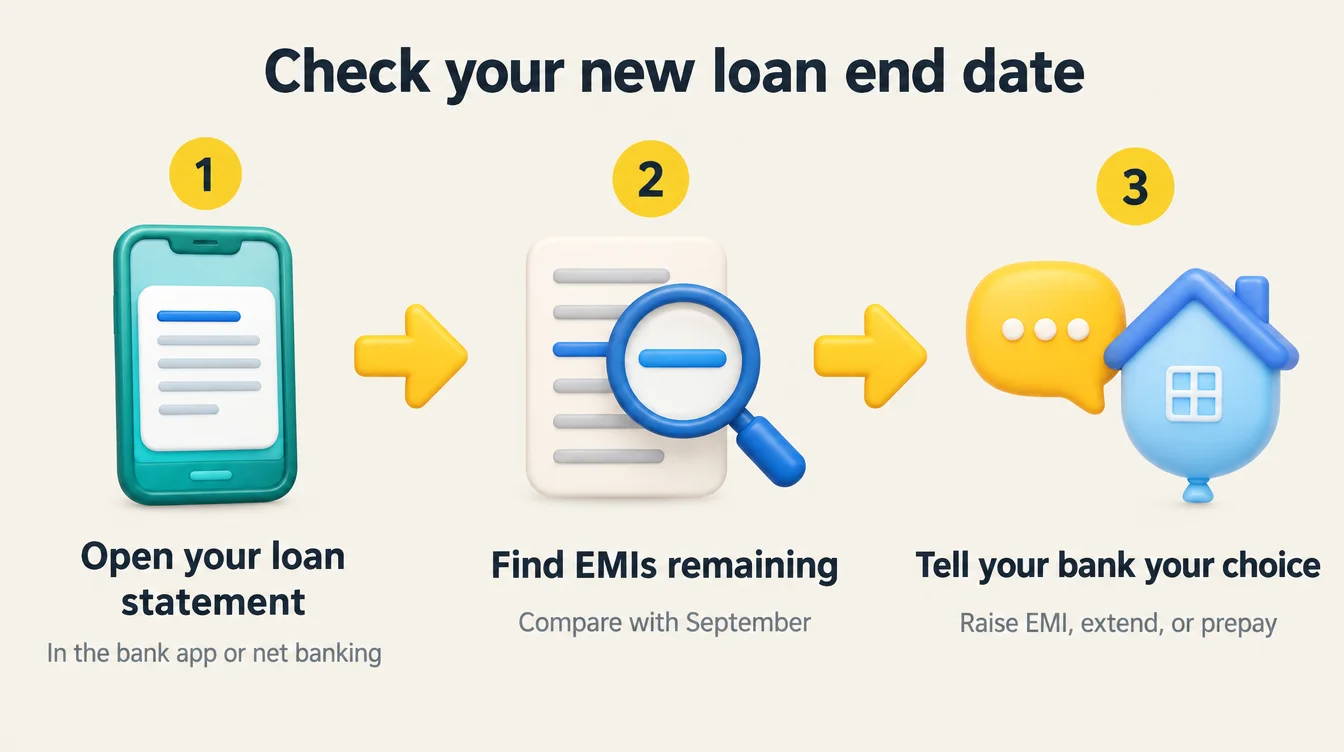
You have a right to choose. Under RBI's rules for floating-rate EMI loans, when your rate resets, your lender has to let you choose between a higher EMI, a longer tenure or a mix of both, and let you prepay. Lenders also have to send you a statement every quarter showing how many EMIs are left. Ask your bank for the option you want, in writing or through its app.
If you have other loans too
The rate hike only changes floating-rate loans linked to a benchmark. Fixed-rate personal loans, car loans and credit card EMIs don't change mid-way. But a longer home loan pushes back your whole family's debt-free date, so it's worth looking at all your loans together. Our guide on how to manage multiple EMIs shows a simple way to do that.
The freeeme app shows the exact month your family will be debt-free, and how that date moves when the rate changes or you pay a little more.
Questions people ask
Will my home loan EMI go up after the RBI rate hike?
If your loan has a floating rate linked to the repo rate, your interest rate goes up at the next reset. Many banks keep the EMI the same and add months to the loan instead, so your EMI may not change but your loan ends later. Fixed-rate loans don't change until their fixed period ends.
Is it better to increase the EMI or the tenure?
Increasing the EMI costs less interest overall, because the loan stays the same length. Increasing the tenure keeps your monthly budget unchanged but costs more in total. If your budget allows a small EMI increase, it is usually the cheaper choice.
Can I ask my bank to raise my EMI instead of extending my loan?
Yes. Under RBI's rules for floating-rate EMI loans, when the rate resets, lenders have to give you options such as a higher EMI, a longer tenure or a mix, and let you prepay. Ask your bank in writing or through its app or branch.
This is general information to help you understand your options, not financial, legal or tax advice. Rates, rules and charges change; check your lender's latest terms before you decide.